Moroccofy
  • Design & Decor
  • Cuisine & Gastronomy
  • Travel & Culture
  • Life & Traditions
Moroccofy
  • Design & Decor
  • Cuisine & Gastronomy
  • Travel & Culture
  • Life & Traditions
Monday, June 1, 2026
Moroccofy
Moroccofy
  • Design & Decor
  • Cuisine & Gastronomy
  • Travel & Culture
  • Life & Traditions
Copyright 2021 - All Right Reserved
Beyond the Jemaa el-Fna: An Insider's Guide to Marrakech's Hidden Gardens
City GuidesTravel & Culture

Beyond the Jemaa el-Fna: An Insider’s Guide to Marrakech’s Hidden Gardens

by Moroccofy December 3, 2025
written by Moroccofy

Introduction: The City of Ochre and Emerald

To understand Marrakech, you must understand its duality. On the surface, the “Red City” is a kinetic assault on the senses: the rhythmic clatter of calèches, the haze of grilling lamb in Jemaa el-Fna, and the labyrinthine intensity of the souks. But beneath this feverish exterior lies a city of profound, deliberate silence.

For centuries, the garden—or ryad—has not merely been a landscaping preference in Morocco; it is a spiritual and architectural necessity. In a city bordering the Sahara, a garden is a defiance of the desert, a manifest prayer for paradise (janna in Arabic, a word synonymous with “garden”).

As a cultural historian, I have spent years tracing the subterranean veins of this city. To walk these gardens is to read the history of Marrakech not in ink, but in water, tile, and shade. Beyond the crowded selfie spots lie sanctuaries where the air drops ten degrees and the sound of traffic is replaced by the murmur of fountains. Here is your expert guide to the hidden botanical soul of Marrakech.


I. The Lifeblood: The Invisible Miracle of the Khettara

Before stepping into the greenery, one must grasp the engineering marvel that makes it possible. Marrakech should, by all rights, be a parched plain. Its lushness is an inheritance from the Almoravids (11th century), who introduced the khettara system—a Persian-influenced network of underground canals.2

These sloping tunnels tapped into the water table of the High Atlas foothills, channeling cool water miles across the Haouz plain without evaporation. When you stand in a Marrakech garden, you are standing atop a thousand-year-old hydraulic grid that turned a military encampment into a garden city. Water here is not just scenery; it is power, history, and life itself.


II. The Icons: Reframed

While famous, these sites hold secrets often missed by the casual visitor.

Le Jardin Secret: The Saadian Revival

  • The Context: Tucked deep within the Mouassine district, this site dates back to the Saadian dynasty (16th century) but was rebuilt in the 19th.3 It is one of the few examples of a great Riad-garden accessible to the public, meticulously restored to show the hydraulic genius of the past.4
  • The Insider Perspective: Most visitors stay on the ground level. However, the true historian’s vantage point is the tower. Access is limited and requires an extra ticket, but it offers one of the highest views in the medina.
  • Pro Tip: Go at “Golden Hour” (one hour before sunset). The light hits the zellige tilework of the pavilion and the distant Atlas Mountains simultaneously. Watch for the exposed sections of the original irrigation channels—archaeological proof of the complex water management described above.

Jardin Majorelle: Beyond the Blue

  • The Context: Yes, it is the most visited site in Morocco.5 Created by French painter Jacques Majorelle in the 1920s and saved by Yves Saint Laurent, it is a masterpiece of Art Deco meets Moorish botany.6
  • The Insider Perspective: The crowds can break the spell. The “Majorelle Blue” (a piercing cobalt) is seductive, but look closer at the botanical collection.7 Majorelle was an amateur botanist who corresponded with plant collectors worldwide; the cactus collection is scientifically significant.
  • Pro Tip: Book the 8:00 AM slot (or the earliest available). For thirty minutes, you can hear the birds and the water—the way Saint Laurent intended it. Don’t skip the Berber Museum inside the studio; it houses one of the country’s finest collections of indigenous jewelry and textiles, curated with academic precision.8

III. The Royal Retreats: Where Locals Breathe

Leave the medina walls to understand the scale of imperial power.

The Agdal Gardens: The Sultan’s Orchard

  • The Experience: Vastly larger than the medina gardens, the Agdal (meaning “walled meadow” in Amazigh) covers hundreds of hectares.9 Built in the 12th century by the Almohads, it functioned as a productive royal farm.10
  • The Vibe: This is not a manicured flower garden; it is a working orchard of olive, orange, and pomegranate trees irrigated by massive basins (tanks).11 It is often closed to the public except on Fridays and Sundays (check local schedules as this fluctuates).
  • Cultural Note: You will see few tourists here. Instead, you’ll find Marrakchi families picnicking under the olive trees. It is a place of “living heritage”—where the leisure habits of the 12th century continue today.12

The Menara Gardens

  • The Experience: Known for its iconic green-tiled pavilion reflected in a vast basin, the Menara is the sister to the Agdal.
  • The Insider Perspective: Skip the mid-day heat. The pavilion faces the Atlas Mountains.13 On a clear winter day, the snow-capped peaks frame the green pavilion—a visual metaphor for the water cycle (snow to stream to basin).

IV. The Avant-Garde & The Hidden: Modern Sanctuaries

For those seeking solitude and contemporary creativity, these lesser-known spots are the city’s current hidden gems.

Jnane Tamsna: The Literary Garden

  • The Story: Located in the Palmeraie, this is the private estate of Meryanne Loum-Martin and her husband, ethnobotanist Gary Martin.14 It is arguably the most elegant example of modern “Moorish fusion.”
  • The Botany: Unlike the rigid geometry of traditional Islamic gardens, the grounds here feel organic and wild. Gary Martin’s expertise shines in the water-wise gardening techniques (xeriscaping) that respect the local climate while creating lushness.
  • Why Visit: It feels like visiting a sophisticated friend’s home. The food served here is often harvested directly from the organic plots on-site.15

Cactus Thiemann: The Desert Surrealist

  • The Discovery: A surreal landscape located north of the city. Founded by Hans Thiemann, a German agricultural engineer who came to Marrakech in the 1960s (tired of growing cacti in greenhouses), it is now Africa’s largest cactus farm.16
  • The Visual: Imagine 150 varieties of cacti, some towering 8 meters high, set against the terracotta earth and blue sky. It is sculptural, alien, and utterly silent.
  • Access: Visits are often by appointment or restricted hours; it requires a short taxi ride but offers a profound disconnect from the city’s chaos.17

ANIMA: The Return of Paradise

  • The Concept: Created by Austrian artist André Heller, ANIMA is a “fantasy garden” in the Ourika Valley.18 It blends sculpture, art, and botany.19
  • The Experience: It refutes the idea that a garden must be purely traditional. Rodin sculptures and Keith Haring pieces peek out from behind bamboo thickets. It is whimsical, colorful, and surprisingly respectful of the local ecology.

V. The Traveler’s Toolkit: Practicalities

FeatureInsider Advice
TimingGardens in Marrakech are best visited in the early morning (for birdsong) or late afternoon (for “golden hour” photography). Mid-day sun washes out the colors and flattens the architecture.
TicketsBook online for Majorelle and Le Jardin Secret. For Agdal, ask your hotel concierge to confirm it is open (often only Fri/Sun).
EtiquetteIn public gardens like Menara, public displays of affection are culturally frowned upon. Dress modestly to blend in with local families.
HydrationWhile these are oases, they are dry. Carry water. At Le Jardin Secret, the rooftop café offers excellent nous-nous (half coffee, half milk) to recharge.

Conclusion: The Garden as Mirror

To sit by a fountain in the Jardin Secret, watching the geometric shadows lengthen across the zellige, is to touch the heart of Moroccan culture. These spaces are not merely escapes from the city; they are the city’s ideal self—ordered, cool, private, and eternally life-giving.

In the end, the gardens of Marrakech teach us a simple, desert truth: water is precious, silence is a luxury, and beauty is a discipline.


December 3, 2025 0 comments
0 FacebookTwitterPinterestEmail
Cuisine & GastronomyDrinks & Rituals

Atay: The Sacred Ritual of Moroccan Mint Tea

by Moroccofy December 3, 2025
written by Moroccofy

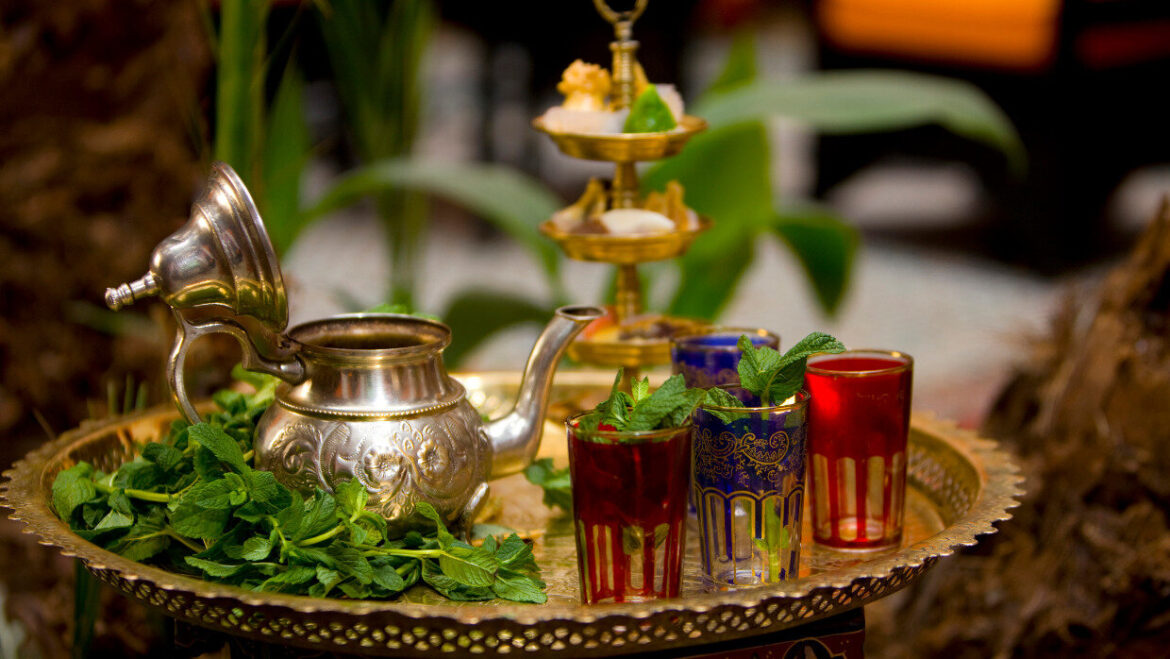
To the uninitiated, it is merely a sweet, hot beverage. But to the Moroccan, Atay (mint tea) is a social currency, a diplomatic tool, and a daily rhythm. It is the first thing offered to a guest and the last thing consumed after a meal. It settles disputes, seals business deals, and welcomes strangers.

In the Maghreb, we do not simply “make” tea; we raise it. The preparation is a performance, and the consumption is a meditation.

This guide explores the history, the chemistry, and the choreography of Morocco’s most enduring tradition: the tea ceremony.


The Accidental National Icon

While Morocco is now synonymous with mint tea, the tradition is surprisingly young. Unlike China or Japan, where tea culture is millennia old, tea arrived in Morocco in the mid-19th century. During the Crimean War, British merchants found their Baltic trade routes blocked and offloaded excess Gunpowder Green Tea at the ports of Tangier and Essaouira.

The Maghrebi locals, who already possessed a rich tradition of brewing herbal infusions (using sage, wormwood, and mint), adopted the Chinese tea leaves, married them with their indigenous mint and imported sugar, and created the “Moroccan Whiskey” we know today.


The Alchemist’s Toolkit: The Holy Trinity

A true Moul Atay (Tea Master) knows that the magic lies in the quality of three specific ingredients.

  1. Gunpowder Green Tea (Le Habba): Named for its appearance—tightly rolled balls of dried leaves resembling 18th-century gunpowder pellets. It is strong, smoky, and assertive.
  2. Fresh Mint (Nana): Not just any mint. We use Mentha spicata (spearmint). It must be fresh, vibrant, and incredibly fragrant.
    • > Expert Note: In the cold winter months, when mint is scarce or weak, Moroccans often switch to Sheeba (Wormwood/Absinthe), which offers a warming, bitter, herbaceous flavor.
  3. Sugar (Skar): In Morocco, we traditionally use large sugar cones (pain de sucre), physically breaking off chunks with a brass hammer. The quantity is unapologetic; the sugar is necessary to balance the tannins of the gunpowder tea.

The Vessel: The Berrad. This is the traditional Moroccan teapot, usually made of silver, stainless steel, or tin, featuring a long, curved spout crucial for the “high pour.”


The Ceremony: A Step-by-Step Guide

This is not a tea bag in a mug. It is a process of washing, steeping, and torture-testing the leaves to extract their soul.

Step 1: The Washing and the “Spirit”

This is the step most foreigners miss, yet it is the most critical for flavor.

  • Put two tablespoons of tea pellets into the empty Berrad.
  • Pour a small glass (approx. 100ml) of boiling water over the leaves.
  • Wait one minute. Do not swirl.
  • Pour this liquid into a glass and keep it. This amber liquid is the “spirit” or the “soul” of the tea—the pure essence before the leaves open fully.
  • The Rinse: Add a second glass of water to the pot. Now, swirl the pot vigorously. The water will turn cloudy and dark. Discard this water. You are washing away the dust and the bitterness of the gunpowder.

Step 2: The Marriage

  • Return the “spirit” (the first glass) back into the pot.
  • Fill the pot with boiling water.
  • Add the sugar (to taste, but usually 3-4 tablespoons).
  • Add the fresh mint. Tip: Twist and break the mint stems in your hand before dropping them in to release the oils.

Step 3: The Sheher (The Cooking)

Place the Berrad directly onto the stove (low heat). Allow the tea to simmer until the liquid rises to the top of the spout. This process, called Sheher, caramelizes the sugar slightly and forces the mint and tea to fuse intensely.

Step 4: The Mixing

Remove from heat. Pour a glass of tea, then pour it immediately back into the pot. Repeat this two or three times. This ensures the sugar is distributed and the flavors are unified.


The Art of the High Pour (El Rizza)

The climax of the ceremony is the pour. This is not theatricality for the sake of show; it serves three distinct scientific purposes:

  1. Aeration: It oxygenates the tea, opening up the flavor profile.
  2. Cooling: The tea inside the metal pot is boiling. The long stream cools it to a drinkable temperature by the time it hits the glass.
  3. The Foam (El Rizza): The turbulence creates a frothy head of bubbles on the surface. In Morocco, tea without foam is considered “naked” or poorly made. The foam protects the liquid from oxidizing too quickly and keeps it hot.

The Technique:

Start pouring with the spout close to the glass. As the stream establishes, lift the Berrad high—often a meter or more—maintaining a steady, unbroken thread of liquid. Just before the glass is full, lower the pot quickly to cut the stream without splashing.


The Etiquette of the Three Cups

If you are a guest, you must know the “Rule of Three.” The tea is served three times from the same leaves, with water and sugar added between rounds. As the tea steeps longer, the flavor evolves. There is a famous Maghrebi proverb that describes this progression:

“The first glass is as gentle as life,

The second is as strong as love,

The third is as bitter as death.”

(Note: Regional variations of this proverb exist, sometimes reversing the order to “Bitter as life, sweet as love, soft as death,” but the tripartite journey remains constant.)

Cultural Guardrail: Never refuse a cup of tea. To do so is to reject the host’s hospitality. Sip slowly, express audible enjoyment (“Bnin!” – Delicious!), and relax. In Morocco, you have nowhere more important to be than right here, holding this warm glass.


December 3, 2025 0 comments
0 FacebookTwitterPinterestEmail
traditional moroccan couscous recipe
Cuisine & GastronomyEssential Recipes

The Alchemy of Steam: Why Boiling Couscous is a Cardinal Sin

by Moroccofy December 3, 2025
written by Moroccofy

Walk through the medina of Fes, the boulevards of Casablanca, or the village paths of the High Atlas on a Friday just after the Dhuhr (midday) prayer, and the air smells the same: a fragrant, humid mix of turmeric, ginger, root vegetables, and the distinct, nutty aroma of semolina wheat.

This is the hour of the Friday Feast. But for the uninitiated, a grave culinary misunderstanding persists. In Western supermarkets, couscous is sold as “instant”—a grain to be drowned in boiling water, covered, and forgotten for five minutes.

To a Moroccan, this is not cooking; it is capitulation.

Authentic Moroccan couscous (seksu in Tamazight, kouskous in Darija) is never boiled.1 It is steamed. The difference is not merely procedural; it is the difference between eating wet paste and eating edible clouds. To understand why, we must look at the history, the physics, and the ritual of the couscoussier.


I. The Heritage: A Gift of the Maghreb

Historians and food anthropologists agree that couscous is a distinct invention of the Imazighen (Berber people) of North Africa.2 While pasta dried into hard shapes to survive long storage in Italy, the Maghreb developed a technique of rolling semolina flour with water to create tiny granules, which were then preserved or cooked fresh.3

Early evidence suggests the production of couscous pots dates back as far as the 11th century during the Almoravid dynasty, though the practice likely predates the written record. It is a dish born of agrarian ingenuity—turning hard durum wheat into a volume-heavy, texture-rich staple capable of feeding large families and entire villages.

II. The Physics of “Tafwar”: Steam vs. Boil

Why is boiling the enemy?

The Boiling Problem:

Couscous is pasta, but it is not macaroni. The granules are too small. When submerged in boiling water, the exterior of the grain gelatinizes instantly, sealing the starch. The result is a heavy, dense clump where the grains stick together. They become waterlogged rather than hydrated.

The Steaming Solution:

The Moroccan method relies on vapor. As steam rises through the grains, they swell slowly and evenly. The starch granules expand without dissolving into one another. This process, repeated two or three times with periods of aeration (fluffing) in between, coats each individual grain in a microscopic layer of moisture.

The result is fluffiness—grains that are separate, light, and capable of absorbing the flavorful broth later without turning into mush.


III. The Architecture of the Pot: The Couscoussier

You cannot make authentic couscous without the proper vessel. It is a piece of binary engineering:

  1. The Barma (or Gdra): The large bottom pot. This holds the water, meat, vegetables, and spices. It generates the flavor-infused steam.
  2. The Kiskas: The top steamer basket with perforated holes. This fits snugly over the Barma.
  3. The Qfal (The Seal): Historically, a strip of damp cloth dipped in flour paste was wrapped around the junction of the two pots to prevent steam from escaping. Today, a strip of plastic or aluminum foil is often used. If steam escapes the sides, the couscous dies.

IV. The Ritual: How to Steam (Step-by-Step)

This is the technique used by Dadas (traditional cooks) across the kingdom. It requires patience—roughly 2 to 3 hours.

Phase 1: The Oil and The Wash

Do not dump the dry grain into the steamer.

  • Technique: Place the dry couscous in a large, wide platter (gsaa). Drizzle with vegetable oil and rub the grains between your palms (fatl) so every granule is coated.
  • Hydration: Sprinkle with a small amount of water (or wash quickly and drain immediately). Let it rest for 10 minutes until the grains swell slightly.
  • The First Steam: Transfer to the Kiskas atop the boiling broth. Allow to steam for 15–20 minutes after you see the steam piercing through the top of the pile.

Phase 2: The Aeration (The Critical Step)

This is where the amateur fails. You must dump the hot couscous back into the gsaa.

  • Technique: Break up the clumps. Traditionally, this is done with hands, braving the heat, but a wooden spoon or whisk is acceptable for beginners.
  • Hydration: Sprinkle liberally with cold water and salt. The grains are thirsty; they will drink this water.
  • Rest: Let it dry for 10–15 minutes. The grains will separate and fluff up significantly.

Phase 3: The Second Steam

Return the grains to the Kiskas. Steam again for another 20 minutes (counting from when the steam escapes the top). The grains are now cooking through, becoming tender but retaining structural integrity.

Phase 4: The Finish (The Soul of the Dish)

Dump the couscous into the gsaa one last time.

  • The Secret Ingredient: Now, you add a tablespoon of Smen. Smen is fermented, salted butter—the “parmesan” of Moroccan cooking. It adds an aged, cheesy, nutty funk that defines the flavor profile. If Smen is too strong for you, high-quality butter or olive oil is a substitute, though a Moroccan would call it a compromise.
  • Texture Check: The grains should be distinct, amber-hued, and tender, with no crunch and no mush.

V. The Assembly: A Fortress of Flavor

Moroccan presentation is distinct from the “mixed” stews of the West.

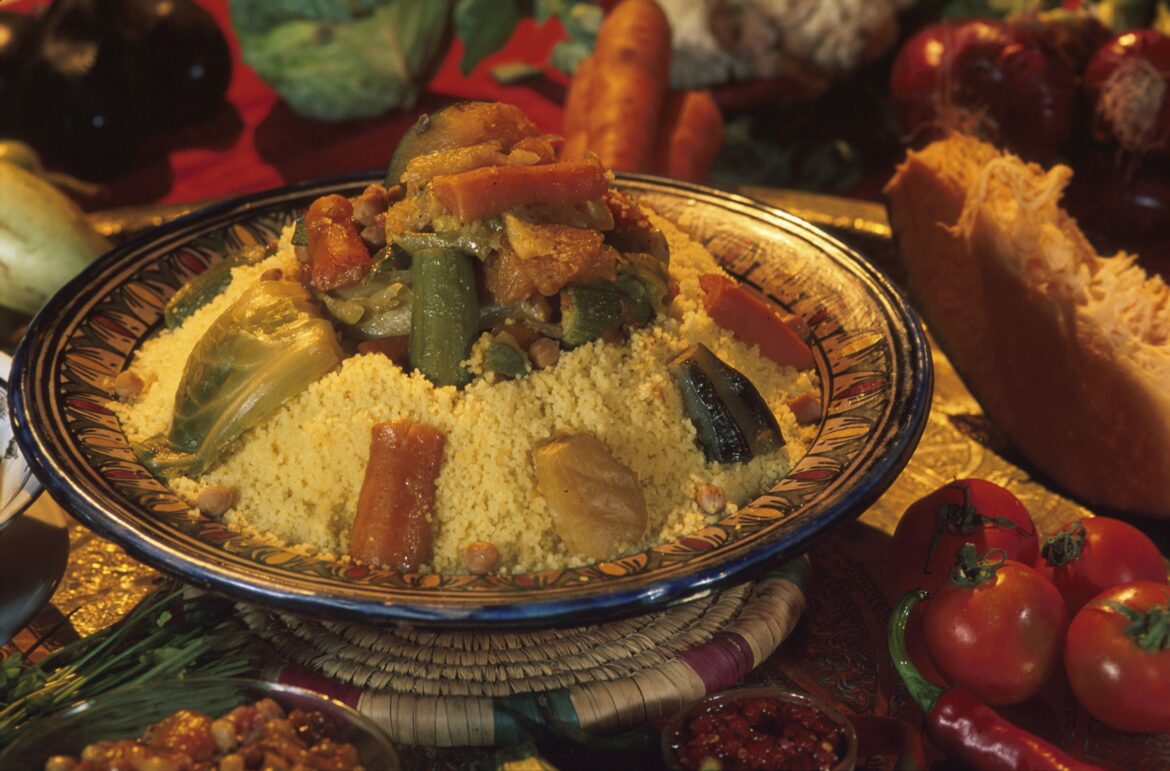
  1. The Bed: The couscous is mounded on a large communal platter.4
  2. The Well: A crater is dug in the center.
  3. The Protein: The meat (lamb, beef, or chicken) is placed in the crater.
  4. The Walls: The vegetables (seven types is traditional: carrots, turnips, pumpkin, zucchini, cabbage, eggplant, tomatoes) are arranged vertically around the meat, creating a colorful fortress.
  5. The Moat: The rich broth from the Barma is ladled over the grains, just enough to moisten, with extra bowls of broth served on the side.

Conclusion

To steam couscous is to participate in a rhythm that has held Moroccan society together for centuries. It teaches patience. It rejects the “instant” nature of modern consumption. When you lift the lid of the kiskas and the steam billows out, filling your kitchen with the scent of the Maghreb, you are not just cooking dinner. You are honoring a civilization.


🥗 Sidebar: Regional Variations

StyleRegionDistinctive Feature
Seven VegetablesCasablance/FesThe classic Friday standard. Savory, turmeric-rich broth.
TfayaWidespreadTopped with caramelized onions, cinnamon, raisins, and toasted almonds. Sweet and savory interplay.
Couscous BelboulaAtlas MountainsMade with barley semolina instead of wheat. Earthier, nuttier, and heavier.
SaykoukRural AreasLeftover plain steamed couscous served cold with fermented buttermilk (lben). A refreshing summer meal.
December 3, 2025 0 comments
0 FacebookTwitterPinterestEmail
Moroccan Harira
Cuisine & GastronomyEssential Recipes

The Velvet Bowl: Harira, the Pulse of Moroccan Ramadan

by Moroccofy December 2, 2025
written by Moroccofy

If you stand in the center of the Medina of Fez or the bustling boulevards of Casablanca at dusk during the holy month of Ramadan, you will witness a profound transformation. As the sun dips below the horizon and the cannon fires—followed immediately by the muezzin’s call to Maghrib prayer—the chaotic noise of the kingdom falls into a sudden, reverent silence.

In millions of homes, spoons are lifted in unison. The air, previously thick with the exhaust of rush-hour traffic, now carries a singular, unifying scent: the earthy perfume of celery, turmeric, and fermented butter. This is the hour of Harira.

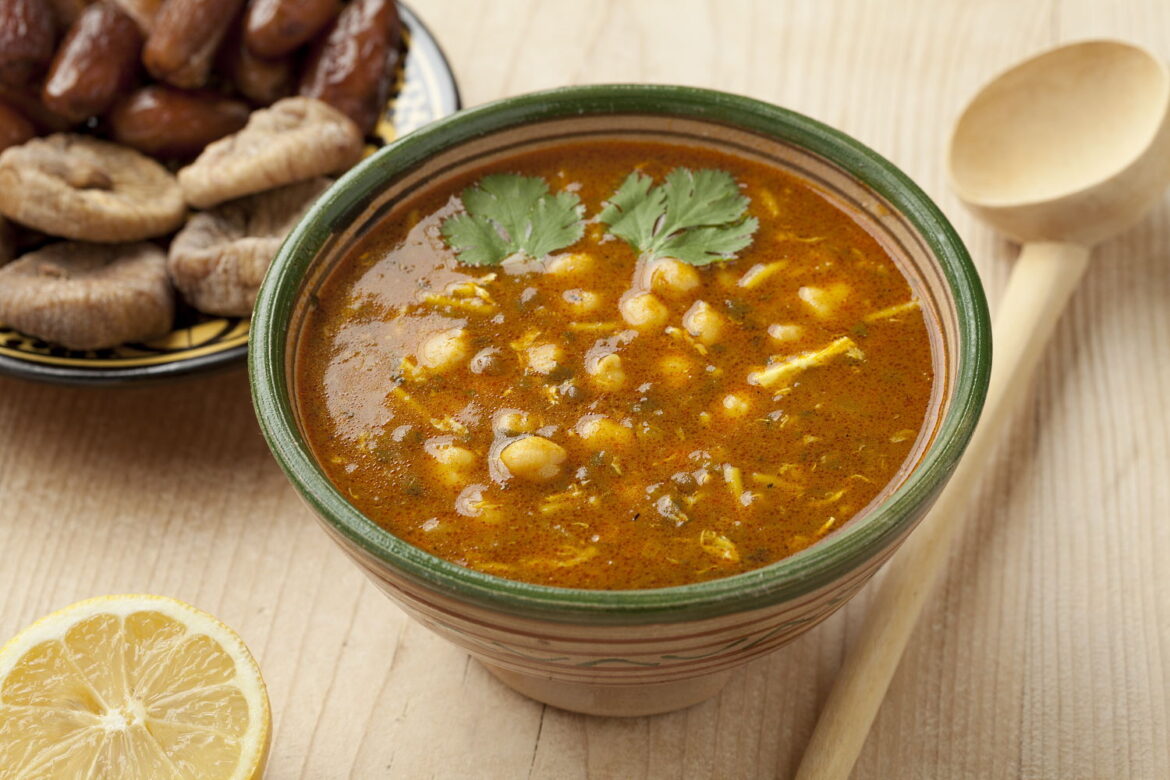
While couscous may be Morocco’s ambassador to the world, Harira is its soul. It is a soup, yes, but to classify it merely as such is to misunderstand its gravity. It is a nutritional powerhouse, a hydration vessel, and a historical artifact in a bowl—a crimson, velvety embrace that signifies the comfort of home.


The Anatomy of a Masterpiece: The Base

At its heart, Harira is a study in texture and balance. While recipes vary from the Rif Mountains to the Sahara, the fundamental architecture of the soup remains consistent. It relies on a rich, sediment-heavy base that distinguishes it from the clear broths of the Middle East or the pureed bisques of Europe.

The foundation is built upon a “Holy Trinity” of ingredients that reflects Morocco’s agrarian history:

  1. The Legumes (The Earth):Harira is anchored by chickpeas (hummus) and lentils (laadas).1 The chickpeas, soaked overnight and often peeled of their skins, provide a buttery crunch, while the lentils offer a deep, iron-rich earthiness.2 This combination is likely a legacy of the Amazigh (Berber) influence, relying on hardy crops that could be stored year-round. They transform the soup into a meal, providing the protein necessary to replenish the body after a day of fasting.
  2. The Tomatoes (The Acid):A vast quantity of red, ripe tomatoes is grated or pureed to create the liquid volume.3 This provides the acidity needed to cut through the starch of the legumes. The addition of concentrated tomato paste deepens the color to a sunset red, a visual hallmark of a proper bowl.
  3. The Herbs (The Aromatics):If there is one non-negotiable ingredient in Harira, it is celery (krafes). While parsley and cilantro are used generously, it is the pungent, stalking bitterness of Moroccan celery (which is leafier and more intense than Western varieties) that gives Harira its signature nose.

Investigative Note: Historically, the integration of tomatoes is a relatively “modern” addition, arriving in the Maghreb with the Columbian exchange via Europe. Pre-16th century versions of this soup likely relied more heavily on broths thickened with grains and flavored with saffron and herbs, closer to the Hassoua (barley soups) still eaten today.


The Ritual of Tadouira and the Smen Secret

What separates a vegetable soup from Harira is the Tadouira. Derived from the Arabic verb “to turn” or “to rotate,” the Tadouira is a fermented mixture of flour and water (and sometimes yeast) added at the end of the cooking process.

The cook must pour this mixture slowly while stirring the pot continuously in a circular motion to prevent lumps. This technique creates the soup’s famous texture—silky, opaque, and coating the spoon. Linguistically, the word Harira itself is thought to stem from the Arabic word hareer (silk), referencing this luxurious consistency.4

However, the defining flavor profile comes from Smen.

Smen is salted, fermented butter, often aged for years in ceramic jars buried underground or stored in dark pantries.5 It has the pungency of a blue cheese or a high-quality parmesan. A spoonful of Smen added moments before serving melts into the hot liquid, imparting an umami depth that fresh butter simply cannot achieve. It is the distinct “funk” that signals authenticity.


The Table: A Study in Contrasts

In the Moroccan culinary philosophy, flavors are rarely isolated; they exist in conversation with one another. Harira is almost never eaten alone. It is part of a calculated nutritional and sensory ecosystem served at the Ftour (breaking of the fast).6

  • The Sweet and Savory: In a pairing that often baffles the uninitiated, Harira is eaten alongside Chebakia—a sesame cookie fried in oil and drenched in honey. One takes a bite of the sticky, sugary pastry, followed by a spoonful of the savory, sour soup. The clash of textures and the balance of sugar and salt is electrifying.
  • The Accoutrements: Dates are mandatory to spike blood sugar levels, while hard-boiled eggs dusted with cumin and salt provide additional protein.

Modern Evolutions and Regional Nuance

While the “classic” Harira is Marrakshi or Fessi in style (tomato-heavy with beef or lamb), regional variations tell different stories:

  • Fez: Often lighter on the lentils but heavier on the Tadouira, sometimes using sourdough starter for a tangier finish.
  • Oujda (The East): May feature more caraway or dried coriander seeds, reflecting proximity to Algerian cuisine.
  • The Rural Atlas: You may find “Harira Beida” (White Harira), which eschews tomatoes entirely, relying on milk, broken semolina, and butter—a callback to pre-Columbian cooking styles.

Conclusion: The Vessel of Memory

To drink a bowl of Harira is to ingest the history of the Maghreb. It is the convergence of Amazigh agriculture, Arab seasonings, and the rhythmic cycle of Islam.

In a rapidly modernizing Morocco, where fast food and continental breakfasts are gaining ground, Harira remains an immovable pillar. It is the ultimate comfort food—a reminder that no matter how far one travels or how much the world changes, the smell of celery and ginger simmering in a pot will always lead the way home.

December 2, 2025 0 comments
0 FacebookTwitterPinterestEmail
Authentic Moroccan Chicken
Cuisine & GastronomyEssential Recipes

Mastering Djaj Mqualli: The Ultimate Moroccan Chicken Tagine Guide

by Moroccofy December 2, 2025
written by Moroccofy

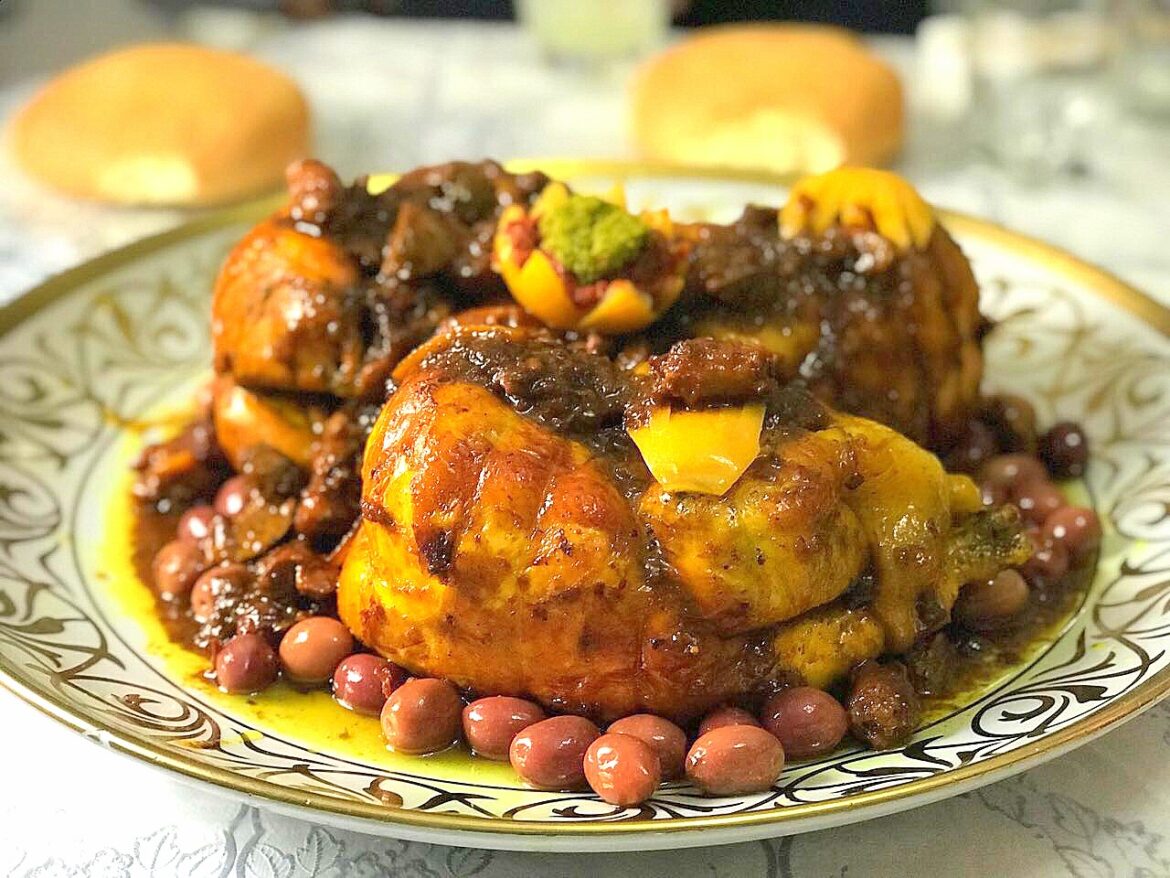
To understand the soul of Moroccan cuisine, one must look past the Couscous Fridays and the charcoal haze of street kebabs, straight into the golden, shimmering heart of Djaj Mqualli—Chicken with Preserved Lemons and Olives.

In the West, “tagine” is often misused as a catch-all term for any Moroccan stew. But in the labyrinthine medinas of Fes and the bustling kitchens of Casablanca, Djaj Mqualli is not merely a recipe; it is a masterclass in the chemistry of reduction and the preservation of history. It represents the perfect marriage of the indigenous Amazigh cooking vessel and the sophisticated, spice-laden palate brought by Arab and Andalusian waves of migration.

This is not a dish of hasty assembly. It is a slow, deliberate courtship between the sharp acidity of fermented lemons and the unctuous, savory sweetness of caramelized onions.


The Cultural Anatomy of the Dish

1. The Trinity: Saffron, Ginger, and Time

Unlike the sweet and savory tagines that feature prunes or apricots, Djaj Mqualli is strictly savory and tangy. Its flavor profile relies on a yellow spice palette:

  • Turmeric (Kherkoum): For the earthiness and the vibrant golden hue.
  • Ginger (Skinjbir): It must be ground, providing a subtle heat that cuts through the richness of the chicken fat.
  • Saffron (Zafran Hor): Real saffron from Taliouine is non-negotiable here. It provides the metallic, floral aroma that elevates the dish from rustic to regal.

2. L’Hamd Marqaad: The Preserved Lemon

The secret weapon of the Moroccan larder is the preserved lemon.1 Buried in salt and left to ferment for months (sometimes years), the lemon’s bitterness transforms into a mellow, intense floral perfume. In this dish, the rind provides texture, while the pulp dissolves into the sauce, seasoning it from within.

3. The Ritual of “Daghmira”

If you ask a Moroccan grandmother what separates a novice cook from a master, she will likely answer with one word: Daghmira.

Most foreign adaptations of this recipe result in a watery soup. Authentic Mqualli requires the sauce to be reduced until the water has evaporated and the onions have melted into a thick, jam-like consistency that separates from the oil.2 This concentrated sauce—the daghmira—is the prize everyone fights for with their bread.


The Recipe: Authentic Chicken Tagine with Preserved Lemon & Olives

This recipe bypasses the shortcuts. It uses the traditional method of braising and reduction to achieve the coveted daghmira.

Prep time: 30 minutes (plus marinating)

Cook time: 1 hour 15 minutes

Serves: 4

The Market List

The Meat:

  • 1 Whole Chicken (approx. 1.5kg): Traditionally, djaj beldi (free-range country chicken) is used for its deeper flavor, but a standard roaster works well. Cut into joints (legs, thighs, breasts halved), skin on.

The Marinade (Chermoula):

  • 3 cloves garlic: Minced into a fine paste.
  • 1 tsp ground ginger: High quality.
  • 1 tsp turmeric powder.
  • ½ tsp white pepper: Preferred over black pepper for a cleaner heat.
  • 1 pinch saffron threads: Crumbled.
  • ½ Preserved Lemon: Pulp only (remove seeds), mashed. Save the rind for later.
  • 1 tbsp water: To bind the spices.

The Pot:

  • 3 large onions: White or yellow, grated or very finely diced (essential for the sauce texture).
  • 1 small bunch fresh coriander and parsley: Tied into a bouquet.
  • 1 tsp Smen (optional): Moroccan fermented butter.3 It adds a cheesy, funky depth comparable to Parmesan or blue cheese.
  • Olive Oil & Vegetable Oil: A mix of both.
  • 1 cup Olives: Traditionally Meslalla (cracked green olives) or Violet/Red olives. Avoid generic pitted green olives if possible; they lack the requisite bitterness.

The Method

Phase 1: The Infusion

  1. Clean the Chicken: In Moroccan fashion, wash the chicken thoroughly with salt and fresh lemon juice to remove any “poultry smell,” then rinse and pat dry.
  2. Marinate: In a large bowl, mix the garlic, ginger, turmeric, pepper, saffron, and the mashed pulp of the preserved lemon with a splash of water. Rub this paste thoroughly into the chicken, getting under the skin. Cover and refrigerate for at least 2 hours, preferably overnight.

Phase 2: The Cold Start

  1. The Pot: While you can cook this in a clay tagine, achieving a proper daghmira is often easier in a heavy-bottomed Dutch oven or pot, transferring to a tagine for serving.
  2. Layer: Place the finely diced onions, the oil, the smen (if using), and the marinated chicken into the pot.
  3. Simmer: Turn the heat to medium-low. Do not add water yet. Cover and let the chicken sweat. The onions will release their liquid. Stir occasionally to coat the chicken.
  4. Braise: After 15 minutes, add the herb bouquet. Add just enough water to come halfway up the chicken pieces. Cover and simmer gently for 45 minutes to an hour, until the meat is tender and falling off the bone.

Phase 3: The Daghmira (Crucial Step)

  1. Remove Chicken: Once cooked, carefully remove the chicken pieces and set them aside. (Optional: You can briefly brown the chicken under a broiler/grill if you prefer crispy skin, though soft skin is traditional for this specific dish).
  2. Reduce: You are now left with onions, liquid, and oil. Discard the herb bouquet. Turn the heat up to medium-high. Cook uncovered, stirring frequently.
  3. Watch closely: The water will evaporate. The onions will turn from white to gold to a deep, caramelized brown. The sauce will thicken. You know it is ready when the oil separates from the thick onion mixture—the sauce will look “curdled” or separated. This is the daghmira.
  4. Final Touch: Add the reserved lemon rinds (cut into strips) and the olives to the sauce. Simmer for 2 minutes just to heat them through.

Phase 4: Assembly

  1. Arrange the chicken on a serving platter or inside a warm clay tagine.
  2. Spoon the thick, rich daghmira, olives, and lemon peels over the chicken.4

How to Eat: A Note on Etiquette

In Morocco, this dish is a communal experience. It is served in the center of the table with round loaves of Khobz (bread).

  • The Bread is the Spoon: Cut a piece of bread, hold it between the thumb and first two fingers of your right hand.
  • The Scoop: Use the crust to scoop up a piece of meat and a generous amount of the onion sauce.
  • The Olive: It is customary to ensure everyone gets a fair share of the olives.

Why This Dish Matters

Djaj Mqualli is a testament to the Moroccan philosophy of food: ordinary ingredients—onions, lemons, a chicken—transmuted by patience and history into something golden and complex. It is the taste of a wedding in Marrakech, a lunch in the Atlas Mountains, and a Friday gathering in Tangier. It is the taste of home.

December 2, 2025 0 comments
0 FacebookTwitterPinterestEmail
Architecture

Sanctuary Within: Deconstructing the Moroccan Riad Aesthetic

by Moroccofy December 2, 2025
written by Moroccofy

To step off a dust-choked, cacophonous street in the Medina of Fes or Marrakech and cross the threshold of a traditional Riad is to experience a physical and spiritual decompression. The noise of the souks vanishes, replaced by the trickle of water and the scent of jasmine. The blinding North African sun is tamed into soft, geometric shadows.

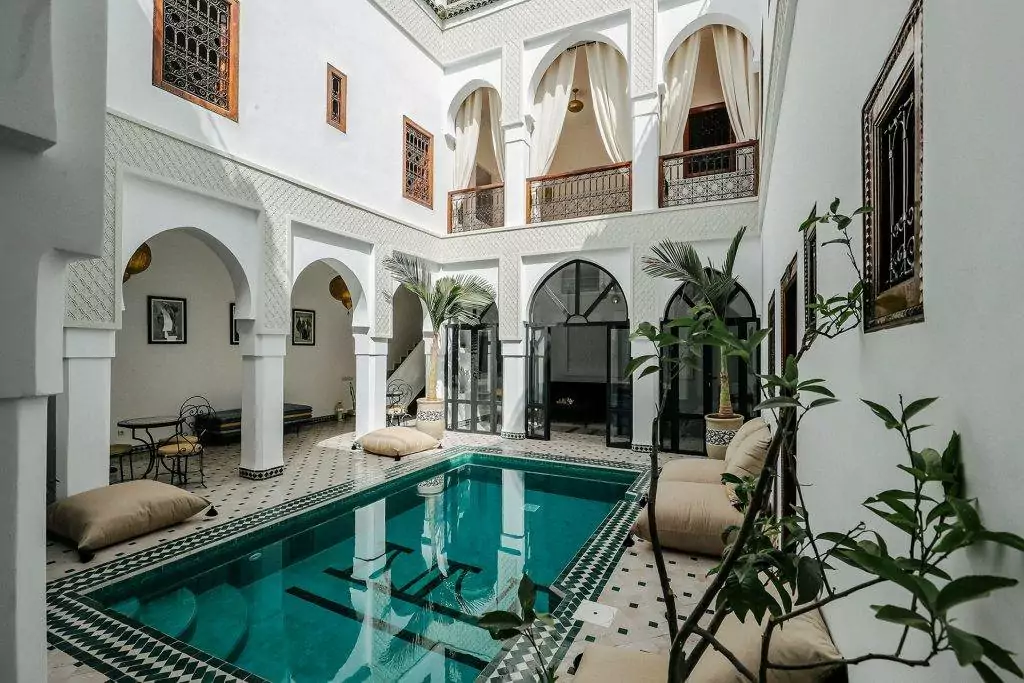
In the West, “Riad” has become a catch-all term for a boutique Moroccan hotel. However, historically and linguistically, the word Riad (from the Arabic ryad) specifically means garden.1 Architecturally, it refers to a home built around a central, open-air courtyard containing four parterres of plants and a central fountain.2

This architecture is not merely decorative; it is a solution to the demands of climate, the requirements of Islamic privacy (sutra), and the spiritual longing for a slice of Paradise on Earth.3

If you wish to transpose the soul of the Riad to your own modern courtyard or patio, you must look beyond the surface decor and understand the function behind the form. Here are the five essential elements of the Riad aesthetic, analyzed through a cultural lens and adapted for your home.


1. The Introverted Wall: Privacy as Luxury

The Cultural Context:

Moroccan domestic architecture is fundamentally introverted. Unlike Western homes that project status outward through grand façades and lawns, the traditional Moroccan house presents a blank, high wall to the street. This is the “Blind Façade.”

This design serves two purposes. First, the climate: thick walls (often made of pisé or rammed earth) create thermal lag, keeping the interior cool during the scorching day and warm at night. Second, the social imperative: the high walls protect the sanctity of the family and the women of the household from the male gaze of the public sphere. The beauty is saved for the inside, revealed only to guests.

How to Borrow It:

  • Create Vertical Enclosure: To mimic the “Riad effect,” you must create a sense of containment. If you cannot build a ten-foot wall, use tall, dense hedging or trellis work to block the horizon line. The goal is to force the eye upward toward the sky, rather than outward toward the neighbors.
  • The “Skyscape” Frame: In a Riad, the patch of blue sky visible from the courtyard is a deliberate architectural element. Use pergolas or shade sails to frame your view of the sky, turning it into a living ceiling.

2. The Soul of Water: The Central Axis

The Cultural Context:

Water is the heart of the Riad. In Islamic symbolism, water represents life, purity, and the rivers of Paradise (Jannah). In the arid landscapes of Morocco, the presence of water is the ultimate luxury.

Historically, the central fountain was not just aesthetic; it was part of a complex gravity-fed water system (such as the khattaras of Marrakech) that cooled the air through evaporative cooling. As air enters the courtyard and passes over the water, it cools and sinks into the lower rooms.

How to Borrow It:

  • Acoustics over Volume: You do not need a swimming pool. A true Riad feature relies on the sound of water to mask external noise and induce a meditative state.4
  • The Wall Fountain: If space is tight, install a wall-mounted fountain (khessara) with a simple copper spout and a mosaic basin. The visual of moving water against tile is quintessentially Moroccan.

3. Zellige: The Geometry of the Infinite

The Cultural Context:

Zellige refers to the hand-cut terracotta tilework characteristic of Morocco, particularly from Fes.5 Unlike the painted tiles of Europe, Zellige is formed by assembling tiny, chiseled geometric shards into complex puzzles.

This art form is rooted in aniconism—the avoidance of sentient living beings in Islamic art. Instead of painting figures, artisans utilized geometry to reflect the infinite nature of God. The imperfect surface of the hand-cut tile catches the light differently throughout the day, making the walls feel “alive.”

How to Borrow It:

  • Strategic Placement: Zellige is expensive and labor-intensive.6 Instead of tiling a whole floor, use it as a focal point—a backsplash for your fountain, a tabletop, or a riser on a staircase.
  • Color Theory: Authentic Riad palettes often use “Fes Blue” (cobalt), emerald green, and saffron yellow. For a modern patio, a monochromatic scheme (e.g., varying shades of turquoise or celadon) captures the texture without overwhelming the eye.

4. The Arch: Framing the View

The Cultural Context:

The arch in Moroccan architecture—specifically the Horseshoe Arch (or Moorish arch) and the multifoil (scalloped) arch—acts as a frame. It softens the harsh structural lines of the building.

In a Riad, arches usually line the bhou (the sitting alcoves opening onto the courtyard). They provide structural support while allowing air and light to flow freely between the open courtyard and the covered galleries.

How to Borrow It:

  • The Illusion of Depth: If you cannot structurally alter your patio, use large mirrors cut in the shape of a horseshoe arch. Placed on a garden wall, this reflects the greenery and creates the illusion of a portal leading to another room.
  • Softening Corners: Use wrought-iron trellises in arch shapes against flat walls to train climbing plants (like Bougainvillea), mimicking the architectural curve with organic matter.

5. The Biophilic Floor: The Four Gardens

The Cultural Context:

We often focus on the masonry, but without plants, a house is a Dar, not a Riad. The classic Riad layout divides the courtyard into four quadrants (representing the four gardens of Paradise mentioned in the Quran), often with fruit trees.7

The planting is sensory. It is designed to engage smell as much as sight. Orange and lemon trees provide shade and the scent of zhar (blossom), while mint and geraniums at ground level repel insects and perfume the air when brushed against.

How to Borrow It:

  • The Citrus Standard: Potted citrus trees (Kumquat, Lemon, or Orange) are essential. Place them in large terracotta pots or Tadellakt (polished lime plaster) planters.
  • Scentscaping: Plant Star Jasmine (Trachelospermum jasminoides) or Night-Blooming Jasmine near the seating area. The Riad aesthetic is incomplete without the heavy, sweet scent of the evening air.

Sidebar: The “Look” vs. The “Feel”

Investigative Note: Many modern renovations in Marrakech have removed the four planted quadrants to make room for plunge pools. While aesthetically pleasing, this technically converts the Riad (garden house) into a Patio style dwelling. To maintain the authentic spirit, ensure that at least 30% of your footprint is dedicated to living greenery.


Summary

The Riad is not just a style of decoration; it is a philosophy of living. It prioritizes the interior world over the exterior, family over public image, and tranquility over activity. By incorporating high walls, the sound of water, geometric complexity, soft arches, and sensory planting, you build more than a patio—you build a sanctuary.

December 2, 2025 0 comments
0 FacebookTwitterPinterestEmail
The Silent Snow and the Singing Rags: A Tale of Two Rugs
Design & DecorRugs

The Silent Snow and the Singing Rags: A Tale of Two Rugs

by Moroccofy December 2, 2025
written by Moroccofy

To understand a Moroccan rug is to understand the hands that tied the knots and the land that birthed the fiber. In the world of Moroccan textiles, two giants stand in stark opposition, representing two very different Moroccan realities.1

On one side, you have the Beni Ourain: the “white giant” of the Middle Atlas, a creature of ancient tradition, silence, and snow. On the other, the Boucherouite: the rebellious, kaleidoscopic “jazz” of the weaving world, born of necessity and vibrant resilience.2

If you are standing in a souk in Marrakech or scrolling through a design feed, paralyzed by choice, you aren’t just choosing a rug. You are choosing between a deep, ancestral warmth and a wild, modern story. Here is your definitive, tactile guide to deciding which one belongs on your floor.


The Contenders

1. The Beni Ourain: The Aristocrat of the Atlas

Origin: The Middle Atlas Mountains (near Taza)3

The Soul: Winter, Silence, Ancestry

The Beni Ourain is not originally a rug; it is a survival mechanism. For the 17 Berber tribes of the Beni Ourain confederacy, living in the frigid altitudes of the Middle Atlas where snow caps the peaks for months, these weavings were heavy blankets and bedding.4

The Material:

The secret to the Beni Ourain’s legendary softness is the Marmoucha sheep.5 This ancient breed, native to the region, produces a wool that is long-staple, incredibly dense, and rich in lanolin (natural oil).6 The wool is almost always undyed, preserving the cream, ivory, and taupe hues of the animal itself.7

The Texture:

When you step onto a genuine Beni Ourain, you don’t just walk on it; you sink into it. The pile is intentionally high (often 25mm to 50mm) to trap body heat. It feels “buttery”—a dense, chaotic cloud of fibers that creates a hush in the room.

2. The Boucherouite: The Art of Resilience

Origin: Rural villages across Morocco8

The Soul: Improvisation, Memory, Resourcefulness

If the Beni Ourain is classical music, the Boucherouite is bebop jazz. The name comes from the Moroccan Arabic phrase bu sherwit, meaning “father of rags” or “scrap.”9 In the mid-20th century, as wool became expensive and socio-economic shifts changed village life, Berber women refused to stop weaving. Instead, they turned to what they had: worn-out djellabas, cotton shirts, nylon, and grain sacks.10

The Material:

This is the ultimate “circular economy” textile. A Boucherouite is a family diary woven into a carpet. That strip of neon orange? A daughter’s old shirt. The deep indigo? A grandfather’s worn robe. The materials are torn into strips and knotted with a ferocity of color that defies the monochrome desert landscape.

The Texture:

The texture of a Boucherouite is a topography of surprises. Because it mixes cotton, wool, and synthetics, the hand-feel is nubby, irregular, and varied. It is not a uniform plushness; it is a tactile adventure—smooth here, coarse there, heavy and grounded.


Side-by-Side: The “Touch & Feel” Analysis

This is where the decision is made. Forget the look for a moment; let’s focus on the physics of the rug in your room.

FeatureBeni Ourain (The Cloud)Boucherouite (The Canvas)
Dominant Material100% Virgin Wool (Marmoucha breed)Recycled Cotton, Nylon, Lurex, Wool scraps
Pile HeightHigh, shaggy, dense (25mm+)Low to Medium, irregular, “rag” texture
Underfoot FeelWarm, enveloping, soft, oily (rich)Textured, massaging, cooler, solid
WeightHeavy, floppy, difficult to move aloneLighter, flexible, easier to shake out
SeasonalityBest for winter warmth & insulationAll-season; stays cool in summer
Sound AbsorptionHigh (dampens echoes significantly)Moderate

The Investigative Angle: Authenticity vs. The Market

As a cultural historian, I must offer a word of warning. The global demand for these rugs has created a market of “fast-fashion” imitations.11

The Beni Ourain Warning:

True Beni Ourain rugs are never chemically bleached snow-white. They should be a creamy, milky ivory with specks of natural brown or grey. If it looks like a sheet of printer paper, the wool has been stripped of its lanolin and soul. Furthermore, a real Beni Ourain has a “floppy” handle; it should not have a stiff, glued backing.12

The Boucherouite Warning:

While harder to “fake” because their essence is scrap, beware of new industrial productions that use fresh fabric rolls cut into strips. A true Boucherouite has the patina of use—the fabrics were lived in before they became a rug. This adds a softness to the cotton that factory fabric cannot mimic.


Which One Is Right For You?

Choose the Beni Ourain if:

  • You crave silence. You want your room to feel quieter, warmer, and more grounded.
  • You have cold floors. The insulation properties of the high-pile wool are unmatched.13
  • Your aesthetic is Minimalist or Scandinavian. You want texture without screaming color. The geometric black/brown diamonds on cream are the definition of “quiet luxury.”14
  • You are okay with “The Shed.” Note: High-quality new wool rugs shed fluff for the first few months.15 It is a sign of life, not a defect.

Choose the Boucherouite if:

  • You have pets or kids. These rugs are virtually indestructible and hide stains beautifully due to their chaotic patterns. Many smaller ones fit in a washing machine.
  • You treat your floor as a gallery. You want a piece of abstract expressionist art that anchors the room with energy.
  • You have a dust allergy. The cotton/synthetic blend holds significantly less dust and dander than the deep pile of a Beni Ourain.
  • You value sustainability. You are buying a piece of upcycled heritage that kept waste out of a landfill.

The Moroccofy Verdict

If I were to place a rug in a master bedroom to wake up to on a chilly January morning, it would be the Beni Ourain. It is the embrace of the mountains.

But if I were styling a living room, a kitchen, or a creative studio—a place where life happens, wine is spilled, and laughter is loud—I would choose the Boucherouite. It is the rug that says, “I have lived, and I am beautiful because of it.”


Would you like me to guide you on how to spot a “fake” rug by looking at the knotting technique on the back, or perhaps suggest which Moroccan region’s rug style fits a specific room color palette?

December 2, 2025 0 comments
0 FacebookTwitterPinterestEmail
The Magic of Light and Shadow: A Guide to Modern Moroccan Lanterns
Artisan CraftsDesign & Decor

The Magic of Light and Shadow: A Guide to Modern Moroccan Lanterns

by Moroccofy December 2, 2025
written by Moroccofy

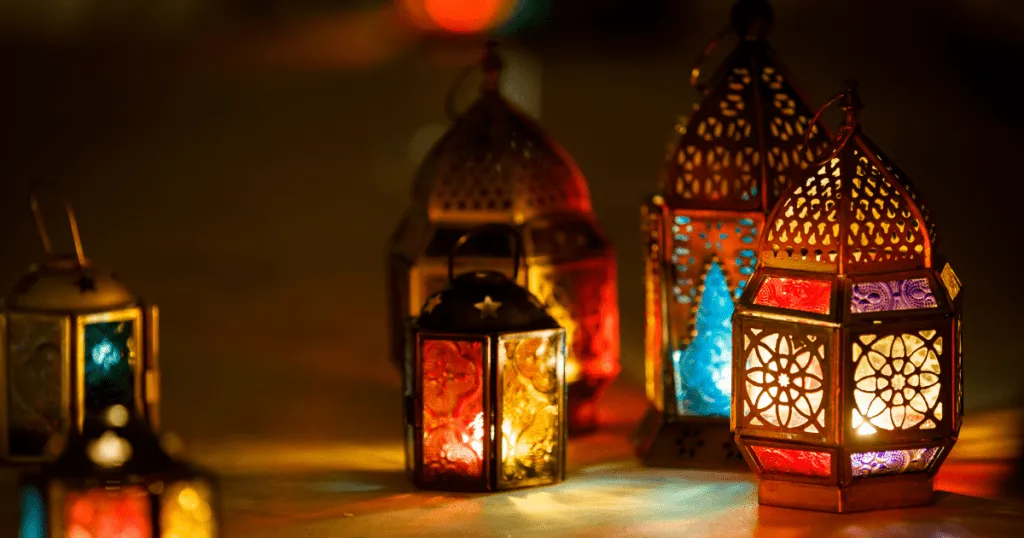
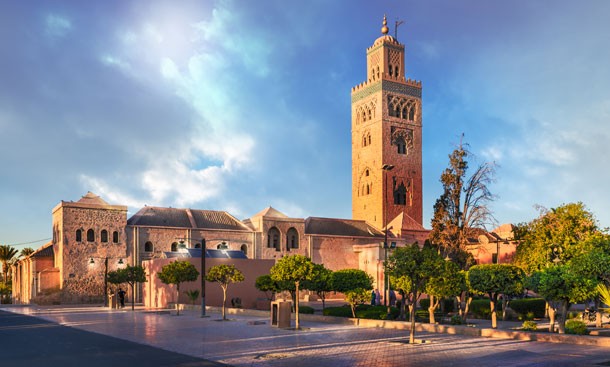
In the labyrinthine alleyways of the Marrakech medina, dusk does not merely fall; it is crafted. As the sun dips below the Koutoubia minaret, a thousand tiny constellations ignite within the brass and copper shops. This is the hour of the fanoos—the Moroccan lantern.

To the uninitiated, these lanterns are simply beautiful objects of decor. But to the cultural historian, they are illuminated manuscripts of Morocco’s past.1 They tell the story of Andalusian geometry, the spiritual symbolism of light in Islam, and the enduring hands of the Maâlem (master craftsman) who beats soul into cold metal.

The Maâlem’s Anvil: Where Metal Meets Soul

The creation of a Moroccan lantern is a rhythmic, almost musical process that has remained largely unchanged for centuries. It begins not with a machine, but with a sheet of raw brass or copper and a stencil drawn by hand.2

The Maâlem uses a vocabulary of tools that would look familiar to a medieval smith. Key among these is the qalam, a chisel used for engraving, and a specialized fretsaw for the technique known as serrouj—the delicate openwork that defines the finest pieces.

Note on Authenticity: A true handmade lantern is never perfect. If you run your hand over the interior, you should feel the rough “burrs” of the metal where it was pierced. Smooth, machine-stamped edges are the tell-tale sign of a factory-produced imitation.

The process is physically demanding. For the tekhrame technique, the artisan places the metal sheet on a bed of bitumen (tar) to absorb the shock, then hammers thousands of tiny holes to create a “needle-point” effect. This is what creates the stardust diffusion of light that modern designers covet.

A Language of Light: Decoding the Patterns

The patterns glowing on your wall are not arbitrary; they are a visual language rooted in Tastir—the traditional art of geometric design.3

  • The Sebka: One of the most prestigious motifs you will find is the Sebka. Originally an architectural motif resembling a net of interlacing arches (often seen on the Giralda in Seville or the Hassan Tower in Rabat), this pattern is painstakingly replicated in metal. It symbolizes infinity and the interconnectedness of creation.
  • The Eight-Pointed Star: Ubiquitous in Islamic art, this star represents the breath of the Compassionate (a name for God) radiating from a center. In a lantern, it serves as the “sun” from which the rest of the floral or geometric galaxy expands.
  • The Mishkat: While often used today to describe a niche-shaped lantern, the term Mishkat has deep spiritual resonance, referencing the Quranic “Verse of Light” (Ayat al-Nur), which describes a “niche within which is a lamp.”4 Traditional lanterns were often designed to hang in these architectural niches, amplifying their glow.

A Tale of Two Cities: Fes vs. Marrakech

Just as accents shift between regions, so do the styles of metalwork.

FeatureFes (Fassi Style)Marrakech (Marrakshi Style)
MaterialPredominantly heavy, high-quality brass.Often uses lighter copper, tin, or iron mixtures.
AestheticRefined, intricate, classical. deeply influenced by Andalusian heritage.Bolder, rustic, sometimes tribal. Influenced by Berber (Amazigh) and Saharan motifs.
TechniqueFamous for “Dinanderie” (fine copperware) and precise, mathematical geometry.6Known for combining metal with colored glass or leather touches.7

The Fassi difference: In Fes, the spiritual capital, the lanterns tend to be “heavier” both in weight and in tradition. A Fassi lantern is often unglazed, relying entirely on the precision of the brass cutouts to fracture the light into sharp, lace-like shadows.

Modern Illuminations

Today, the Moroccan lantern has transcended the souk to become a staple of global interior design.8 However, the modern iteration has evolved.

  1. The Electric Transition: Traditional fawanees (plural of fanoos) were built for candles or oil, featuring a door to access the flame. Modern versions are often “closed” sculptures designed to slip over a pendant bulb.
  2. The “Teardrop” Silhouette: While the hexagonal lantern is classic, the elongated “teardrop” shape—often associated with the Mishkat style—has become a favorite in contemporary homes for its elegant, vertical lines that draw the eye upward.9
  3. The Shadow Play: Modern designers use these lanterns less for illumination and more for atmosphere.10 A single brass pendant with a clear bulb (filament bulbs work best) can texture an entire room with light and shadow, effectively “wallpapering” the room with light.

How to Buy Like an Expert

If you are looking to bring a piece of this magic into your home, look for the patina. New brass is blindingly shiny, almost gold-like. But a high-quality lantern is often treated to age gracefully, developing an oxidized, matte finish that looks warm even when the light is off.11

The Weight Test: Lift the lantern. It should feel substantial. If it feels as light as a soda can, it is likely a tourist-grade aluminum alloy that will bend easily and lacks the thermal mass to handle the heat of a strong bulb safely.


A Final Thought

In a world of harsh fluorescent lighting and flat LED panels, the Moroccan lantern offers something rare: a light that is alive. It breathes, it dances, and it transforms the empty space of a room into a canvas of history. It is a reminder that in Morocco, beauty is never just surface deep—it is always an interplay of the material and the immaterial, the brass and the light.

Next Step for You: Would you like me to create a guide on how to wire and install these lanterns safely in a Western home, or perhaps explore the textile traditions (like Berber rugs) that pair perfectly with this lighting style?

December 2, 2025 0 comments
0 FacebookTwitterPinterestEmail
The Quiet Kasbah: Mastering the Art of Modern Moroccan Minimalism
Design & DecorInterior Styling

The Quiet Kasbah: Mastering the Art of Modern Moroccan Minimalism

by Moroccofy December 2, 2025
written by Moroccofy

In the collective imagination, Moroccan design is often synonymous with a riot of sensory input: the dizzying geometric infinity of polychromatic Zellige, the clashing brilliance of Souk dyes, and the heavy, ornate cedar of ancient palaces.1 This is the Morocco of the “Maximalist” dream.

But there is another Morocco. It is the Morocco of the high Atlas peaks shrouded in silent snow, the sun-bleached limestone of the coast, and the hushed, spiritual serenity of a Riad courtyard at dawn. This is the root of Modern Moroccan Minimalism—a design philosophy that does not erase culture, but distills it.

To master this aesthetic is to understand that true Moroccan luxury has never been about clutter; it has always been about the sanctuary. Here is how to strip back the noise and reveal the soul of the craft, focusing on neutral walls, the singular power of the rug, and the art of restraint.


I. The Canvas: Tadelakt and the “Living” Wall

In Western minimalism, walls are often sterile—flat, acrylic white surfaces that feel industrial. In Morocco, a minimalist wall feels alive. This is achieved through Tadelakt.

Originally developed by Amazigh (Berber) craftsmen in the Marrakech region to waterproof cisterns, Tadelakt (from the Arabic dellek, meaning “to knead” or “massage”) is a lime plaster technique that creates a finish as smooth as a river stone.3 It is not painted; it is burnished with a polished pebble and sealed with black olive soap (savon beldi).4

The Application:

To achieve the “Clean Lines” look, avoid standard matte paint. Instead, aim for the tactile, undulating imperfection of Tadelakt or a lime-wash equivalent.

  • The Palette: Reject “Hospital White.” Go for Hlib (milk white), Ramla (sand), or the faintest whisper of Gris Souris (mouse grey).
  • The Effect: These walls catch the light differently throughout the day, holding shadows in a way that feels soft and enveloping, rather than cold and empty. They provide the perfect, quiet canvas for what comes next.

II. The Anchor: The Soul of the Beni Ourain

In a minimalist room, you are allowed one “shout.” In this aesthetic, that shout belongs to the floor.

The Beni Ourain rug is the superstar of mid-century modern and Scandinavian design, but its roots are deeply tribal.5 Woven by the semi-nomadic tribes of the Middle Atlas mountains, these rugs were never intended as decoration—they were sleeping mats and blankets made from the high-grade wool of the Marmoucha sheep.6

How to Choose:

  • Authenticity is Key: A true Beni Ourain is not stark white and black. It is cream, ivory, or buttery yellow (the natural oil of the wool) with motifs in dark brown or charcoal (natural dyes).
  • The “Marmoucha” Texture: Look for a high pile. The minimalism comes from the simple, graphic diamond patterns, but the luxury comes from the depth of the wool.
  • Placement: Do not cover this rug with a heavy coffee table. In Modern Moroccan Minimalism, the rug is the furniture. It anchors the “majlis” (seating area) and invites you to sit low, near the ground, grounding the room in ancient comfort.

III. The Accent: Zellige as Texture, Not Pattern

This is where most attempts at Moroccan design fail—they use too much tile, in too many colors. To modernize Zellige (hand-cut terracotta tile), we must look at it not as a source of color, but as a source of texture.7

The beauty of Zellige lies in its flaws. Because they are hand-chiseled by a Maalem (master craftsman), no two tiles are identical. They reflect light in shimmering, uneven pools.

The Minimalist Approach:

  • Monochrome Magic: Use Bejmat (rectangular tiles) or standard square Zellige in a single color—white on white, or matte black on black.
  • The “Invisible” Grid: When you remove the contrasting color, the eye focuses on the irregular surface of the clay. A white Zellige backsplash in a white kitchen isn’t boring; it’s a study in light and shadow.
  • Restraint: Do not tile the whole room. Choose a niche, a fireplace surround, or a kitchen island. Let the clay breathe.

IV. The Jewelry: Brass, Leather, and Light

If the walls are the skin and the rug is the soul, the accents are the jewelry. Moroccan craftsmanship excels in metalwork, but modern minimalism requires a light touch.

  • Lighting: Swap the heavy, multi-colored glass lanterns for perforated brass or copper.8 When unlit, they are sleek, metallic sculptures. When lit, they cast the famous filigree shadows, instantly transforming the mood without adding physical clutter.
  • Leather: A cognac leather pouf is the ultimate flexible furniture. It adds a warmth (the color of henna/earth) that breaks up the neutral palette without clashing.
  • Wood: Look for subtle Mashrabiya (turned wood) details on a chair leg or a mirror frame, rather than entire heavy cabinets.

Visual Sidebar: The “Modern Nomad” Palette

To execute this look, curate your materials using this sensory guide:

ElementMaterial/ColorThe Sensory Goal
WallsLime Plaster / Tadelakt in Ecru or Limestone.Soft to the touch; absorbs light rather than reflecting it.
FloorsBeni Ourain Wool (Cream/Charcoal) or Polished Concrete.High contrast between the cold floor and the warm, deep-pile rug.
MetalsUnlacquered Brass or Matte Black Iron.Patina that ages with time. Avoid shiny, “new” gold.
TextilesCactus Silk (Sabra) or Washed Linen.Faded, sun-bleached colors: Terracotta, Sage, Indigo (used sparingly).

The Verdict: A Sanctuary of the Mind

Modern Moroccan Minimalism is not about buying a “Marrakech-style” object from a big-box store. It is about adopting the Moroccan concept of Hshouma in its architectural form: privacy, modesty, and inward-facing beauty.

By pairing the imperfect, human touch of Zellige and Tadelakt with the clean lines of modern living, you create a space that doesn’t just look Moroccan—it feels like a sanctuary. It is a quiet Kasbah, standing firm against the noise of the outside world.


December 2, 2025 0 comments
0 FacebookTwitterPinterestEmail
Newer Posts
Older Posts

Recent Posts

  • The Price of Progress: Casablanca’s Old Medina Faces the Wrecking Ball

    April 28, 2026
  • The Moroccan Paradox: Lifting Trophies While Standing in the Mud

    December 18, 2025
  • Rabat: The Coolest Cultural Capital You’re Skipping

    December 17, 2025

Top Categories

  • Architecture (1)
  • Artisan Crafts (1)
  • Arts & Entertainment (1)
  • City Guides (2)
  • Cuisine & Gastronomy (4)
  • Design & Decor (3)
  • Drinks & Rituals (1)
  • Essential Recipes (3)
  • Festivals (1)
  • History & Heritage (1)
  • Interior Styling (1)
  • Language (1)
  • Life & Traditions (4)
  • Natural Wellness (2)
  • News (2)
  • Practical Travel (1)
  • Rugs (1)
  • Travel & Culture (4)

Get latest news

Subscribe my Newsletter for new blog posts, tips & new photos. Let's stay updated!

Quick links

  • About Us
  • Contact Us
  • Privacy Policy
  • Terms of Use
  • Sitemap

Recent posts

The Price of Progress: Casablanca’s Old Medina Faces the Wrecking Ball
The Moroccan Paradox: Lifting Trophies While Standing in the Mud
Rabat: The Coolest Cultural Capital You’re Skipping

Airhelp

Helps passengers receive ​up​ to €600 in compensation for delayed or canceled flights
Top Posts
The Price of Progress: Casablanca’s Old Medina Faces...
The Moroccan Paradox: Lifting Trophies While Standing in...
Rabat: The Coolest Cultural Capital You’re Skipping
10 Essential Darija Phrases That Will Change Your...
Fez vs. Marrakech: Choosing Your Imperial City Adventure
Moroccan Etiquette 101: Tipping, Haggling, and What to...

@2025 – All Right Reserved. Designed and Developed by Moroccofy.

Moroccofy
  • Design & Decor
  • Cuisine & Gastronomy
  • Travel & Culture
  • Life & Traditions
Moroccofy
  • Design & Decor
  • Cuisine & Gastronomy
  • Travel & Culture
  • Life & Traditions
@2021 - All Right Reserved. Designed and Developed by PenciDesign

Shopping Cart

Close

No products in the cart.

Close