Moroccofy
  • Design & Decor
  • Cuisine & Gastronomy
  • Travel & Culture
  • Life & Traditions
Moroccofy
  • Design & Decor
  • Cuisine & Gastronomy
  • Travel & Culture
  • Life & Traditions
Monday, June 1, 2026
Moroccofy
Moroccofy
  • Design & Decor
  • Cuisine & Gastronomy
  • Travel & Culture
  • Life & Traditions
Copyright 2021 - All Right Reserved
News

The Price of Progress: Casablanca’s Old Medina Faces the Wrecking Ball

by Moroccofy April 28, 2026
written by Moroccofy

In the shadow of one of the world’s largest mosques, a centuries-old urban fabric is being dismantled — street by street, family by family. Morocco’s economic capital is remaking itself, but at what cost?


On a September morning in 2024, demolition crews moved through the narrow lanes of Casablanca’s Old Medina before many residents had stirred from sleep. By dusk, structures that had stood for generations were rubble. In one case, the family of the late activist Haj Ali El Manouzi discovered that a building adjacent to their historic home had been earmarked for destruction — despite, they say, a judicial report certifying its structural soundness.

“They gave us verbal notice the night before,” said Abdelkarim El Manouzi, who subsequently filed an appeal with the Administrative Court. “This is a legal overreach.” His family’s experience — swift, top-down, contested — encapsulates a drama unfolding across Casablanca’s oldest neighbourhood, where the ambitions of urban planners are colliding with the lived realities of a community that has called this labyrinthine quarter home for centuries.


A City Between Two Ages

The Old Medina of Casablanca — Dar el Beida in Arabic, the White House — predates the city that has grown around it almost beyond recognition. When the French established their protectorate in the early twentieth century and transformed a modest Atlantic port into Morocco’s commercial engine, they deliberately left the Medina in place, ringed by a European-built new city. That act of separation, intended to distinguish the “modern” from the “traditional,” gave the Medina its lasting character: dense, vibrant, and incrementally neglected.

Today, the Old Medina contains around 3,644 buildings, of which authorities have classified 792 as requiring total demolition. It sits at the edge of one of Africa’s busiest ports, adjacent to the Hassan II Mosque — the world’s third-largest, completed in 1993 with its 200-metre minaret casting a long shadow across the quarter — and is flanked to the west by the glittering Casablanca Marina, a luxury waterfront development that advertises a very different vision of the city.

The Medina’s position on this contested real estate, sandwiched between Islamic grandeur and Atlantic-facing glamour, is not incidental. It is, in many ways, the point.


The Boulevard That Would Not Die

The centrepiece of Casablanca’s transformation plans is the Avenue Royale — a grand boulevard conceived in the 1980s to link the Hassan II Mosque directly to Mohammed V Boulevard at the heart of the city. In September 2025, the project was finally secured with a 2 billion dirham investment and a completion target of 2029. Casablanca’s mayor, Nabila Rmili, called it “a historic moment,” describing a project that would combine “social resettlement, urban planning, and sustainable development.” Its ecological centrepiece is planned to be a 50-hectare urban park — the city’s largest green space.

But the Avenue Royale has been a “historic moment” before. It was announced in the 1980s, reconfirmed in 1993, restarted in phases in the 2000s, and has been intermittently delayed and contested ever since. A 2024 survey along its proposed route identified more than 1,730 structures classified as ruinous. The project is administered by SONADAC, the national agency for communal development, which has relocated thousands of families to peripheral suburbs — though the programme has long been criticised for poor planning. When 530 families were moved in the earliest phase in 1995, researchers from Hassan II University found that basic necessities — schools, health centres, parks — had not been incorporated into the receiving neighbourhoods.

The pattern has continued. Today, families displaced from the Medina are being offered roughly 9,000 dirhams in rental assistance and, in some cases, a payment of 10 million centimes to help find alternative housing. Residents have largely rejected these offers.

“We are not just losing a building,” one shopkeeper in the Bab Marrakech market told local journalists earlier this year, as the demolition of the Medina’s oldest market got underway on 2 January 2025. “We are losing everything — our customers, our suppliers, our whole way of life.” Traders were transferred to a temporary market on Rue Boucraa, near the mosque. The permanent replacement, officials say, will be rebuilt on two levels with underground parking, with modern hygiene standards. Some neighbouring merchants welcomed the facelift. Others were less certain.


The Language of Danger

Central to the controversy is a question of classification. Under Moroccan law, buildings designated as menaçant ruine — structurally dangerous — can be demolished by authorities without the same procedural safeguards that protect other properties. Critics allege that this designation has been applied too broadly, catching habitable homes in its net to accelerate clearance for the Avenue Royale.

A parliamentary question filed by Nabila Mounib of the Unified Socialist Party directly challenged the Interior Minister, Abdelouafi Laftit, over what she described as the “forced displacement” of Medina residents. Many families, she noted, had invested in renovating their homes and had technical assessments proving structural viability — yet still received demolition orders. “Some of these houses have only a few cracks,” a community spokesperson for a residents’ group told journalists. “To call them totally dangerous is not a technical conclusion. It is a political one.”

The community of Casablanca has allocated around 23 million dirhams for the demolition process, but the questions of compensation, relocation, and legal protection remain unresolved for hundreds of families.


Experts: A Heritage Without a Shield

Urban scholars have long noted that Casablanca’s heritage problem is structural — not merely a matter of political will, but of regulatory architecture. The city’s Master Plan for Urban Development, dating from the 1980s, acknowledged the historic value of the Medina. But acknowledgement was never backed by binding protection. As one analysis published in the Journal of Mediterranean Cities in 2025 observes, zoning plans for the Sidi Belyout district actually permitted increased building heights — effectively incentivising demolition and replacement. “The contradictions between strategic planning documents and regulatory instruments have opened the door to opportunistic land strategies,” the authors write. “This is not merely a market drift but the result of administrative arrangements that make speculation both possible and profitable.”

The heritage advocacy group Casamémoire has for years lobbied for stronger protections for Casablanca’s built legacy, though critics note the organisation’s focus has historically centred on the Modernist architecture of the French Protectorate era — the Art Deco apartment blocks and Beaux-Arts public buildings of the new city — rather than on the Medina itself. There is something uncomfortable, observers suggest, in a preservation movement that tends to privilege the colonial city over the pre-colonial one.

“The question of in whose interest this transformation is being carried out has never been properly answered,” said one urban sociologist familiar with the project.


The Global Comparison

Casablanca is hardly alone in navigating this tension. In Beirut, the post-war reconstruction of the city centre by Solidere, the private real estate company, was praised internationally for its ambition and criticised locally for erasing communities and replacing them with luxury developments largely inaccessible to the original population. In Istanbul, the clearance of historic Sulukule — one of the oldest Roma settlements in Europe — under urban transformation laws drew condemnation from UNESCO and human rights groups. Cairo’s attempts to “modernise” historic districts in Islamic Cairo have similarly produced a contested landscape of half-finished projects and displaced residents.

In each case, the pattern is recognisable: official urgency framed around safety or hygiene, classifications that expand the demolition footprint, compensation perceived as inadequate, and a future city imagined primarily for tourists, investors, and the middle class rather than for those currently living there.


The Future on the Drawing Board

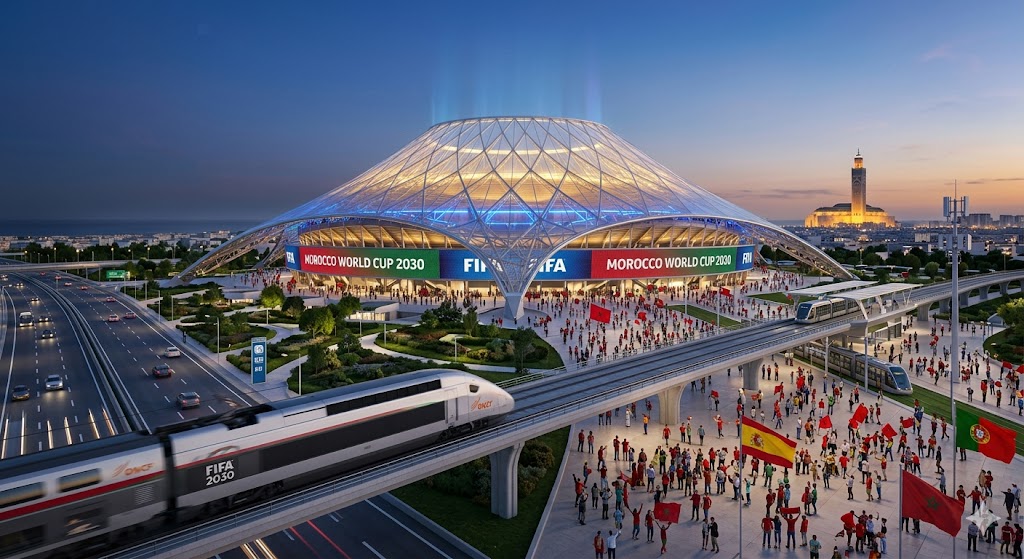
What Casablanca’s authorities are proposing, in its best articulation, is genuinely ambitious. The Avenue Royale would create a monumental civic spine connecting Morocco’s most iconic religious landmark to its commercial heart, lined with greenery in a city starved of public parks. The Bab Marrakech market, rebuilt with modern sanitation and logistics, could serve the Medina’s traders more effectively than the cramped, ageing souk it replaces. The Marina and promenade projects extend a renewed Atlantic-facing identity that positions Casablanca as a destination city ahead of the 2030 FIFA World Cup, which Morocco will co-host.

The Casablanca-Settat region already accounts for roughly 32% of Morocco’s GDP and nearly half of all investment in the country. Infrastructure investment at this scale, its proponents argue, is an economic necessity, not a luxury.

But the history of the Avenue Royale — announced, delayed, restarted, and contested over four decades — suggests that grand blueprints and lived realities continue to diverge. As of mid-2025, authorities were still facing legal challenges and community resistance in the El Bahira area, where demolitions proceeded even as court appeals were pending.


A City in the Mirror

There is a photograph taken in any medina at dusk: the call to prayer echoing over low rooftops, tea glasses catching the last light, a child running between stalls. It is the kind of image that appears in tourism campaigns — authentic, timeless, marketable. What rarely appears in those campaigns is the notice on the door, the bare concrete of the relocation apartment forty kilometres away, or the trader who finds that his new stall, however modern, sits too far from the foot traffic he spent a lifetime cultivating.

Casablanca is a city that has always reinvented itself. It was a village before the French arrived, a protectorate capital before independence, a megacity before anyone had planned for it to be one. The Old Medina has survived all of these transformations — battered, neglected, but inhabited.

Whether it survives this one may depend less on the 2 billion dirhams earmarked for the Avenue Royale and more on whether the city finds the will to ask a question it has long avoided: who is the new Casablanca actually for?


Reporting drawn from official municipal announcements, parliamentary records, academic research, and local press coverage from 2024–2025.

April 28, 2026 0 comments
0 FacebookTwitterPinterestEmail
The Moroccan Paradox: Lifting Trophies While Standing in the Mud
News

The Moroccan Paradox: Lifting Trophies While Standing in the Mud

by Moroccofy December 18, 2025
written by Moroccofy

If you were to sketch the soul of Morocco tonight, you would need to use your heaviest charcoal and your brightest gold leaf simultaneously. You would need to draw a people whose hands are calloused from digging through the mud of tragedy, yet whose arms are currently raised high, lifting a gleaming trophy toward the sky.

This is the profound duality of the Moroccan experience right now. It is a nation capable of holding immense grief in one chamber of its heart and explosive, raucous joy in the other—without one diminishing the reality of the other.

A Historic Victory: The FIFA Arab Cup 2025

Tonight, the streets of Casablanca, Rabat, and Marrakech are a cacophony of car horns, red flares, and chanting crowds. The national team A’, the Atlas Lions, have just won the FIFA Arab Cup in a heart-stopping 3-2 extra-time thriller against Jordan in Qatar.

It is a massive achievement, a shot of pure adrenaline just three days before the Kingdom hosts the entire continent for the Africa Cup of Nations (AFCON). The victory serves as a prelude to what Moroccans hope will be a month of sporting glory.

The Silence of Safi

Yet, under the noise of the celebration, there is a different frequency—a somber, heavy bass note that everyone can feel.

Just 300 kilometers south of the celebrating crowds, the historic city of Safi is silent. The mud from Sunday’s devastating flash floods has barely dried in the Bab Chabaa district. At least 37 lives were washed away in torrents that turned ancient streets into rivers of debris. Families are still searching; shopkeepers are shoveling out their livelihoods; and the nation is asking hard questions about infrastructure and preparedness after years of drought ended in sudden catastrophe.

How does a country reconcile these two realities separated by only four days and a few hundred miles?

Cognitive Dissonance or Survival?

The outsider might call it cognitive dissonance. The Moroccan calls it survival.

To understand Morocco is to understand this capacity for rapid, almost jarring emotional pivoting. It is a resilience born of history, geography, and faith. Moroccans understand viscerally that life is not a linear progression from bad to good, but a cyclical turbulence where disaster and triumph often arrive on the same tide.

The celebration tonight is not an act of forgetting Safi. Browse Moroccan social media, and you see the duality in real-time. A user posts a video of Abderrazak Hamdallah’s 100th-minute winning goal with fire emojis, and in the very next post, shares a prayer for the lost souls of Safi and a call for donations to the flood relief fund.

A Psychological Life Raft

The trophy lifted tonight in Qatar is more than silverware. In the context of this week, it has become a psychological life raft. The victory provides a necessary release valve for a collective anxiety that has built up from the drought, the recent building collapses in Fes, and the tragedy in Safi.

Moroccans are “drawing” their future right now, in real-time. They are sketching a self-image of a modern, capable nation ready to host the world for AFCON this weekend. They want the world to see the trophy, the stadiums, the infrastructure, and the footballing prowess.

But the artist’s hand is shaking. They know the sketch also contains the darker strokes of vulnerability exposed by the rain.

Tonight, the Atlas Lion roars with a trophy in its jaws. Tomorrow, the nation will wake up, the hangover of victory will fade, and the hard work of rebuilding Safi will continue. They will do both. They will weep for the lost, and they will cheer for the living. They will lift the mud, and they will lift the trophy. That is the Moroccan way.


December 18, 2025 0 comments
0 FacebookTwitterPinterestEmail
Rabat: The Coolest Cultural Capital You’re Skipping
City Guides

Rabat: The Coolest Cultural Capital You’re Skipping

by Moroccofy December 17, 2025
written by Moroccofy

For decades, Rabat was the “Sleeping Beauty” of North African travel. While tourists flocked to the sensory chaos of Marrakech or the medieval labyrinth of Fez, the capital remained quiet, administrative, and—dare we say it—a little bureaucratic.

That era is over.

Recently named the very first African Capital of Culture, Rabat has undergone a metamorphosis that is nothing short of spectacular. It has shed its reputation as merely a government hub to emerge as a vibrant “Ville Lumière” (City of Lights). With the recently inaugurated Grand Theatre, a world-class modern art museum, and a green urban plan that rivals European capitals, Rabat isn’t just a stopover anymore; it is the continent’s newest cultural powerhouse.

Here is why you need to visit Rabat now, before the rest of the world catches on.


The “Zaha Hadid” Effect: A New Skyline on the Bou Regreg

If there is a single symbol of Rabat’s reinvention, it is the Grand Theatre of Rabat.

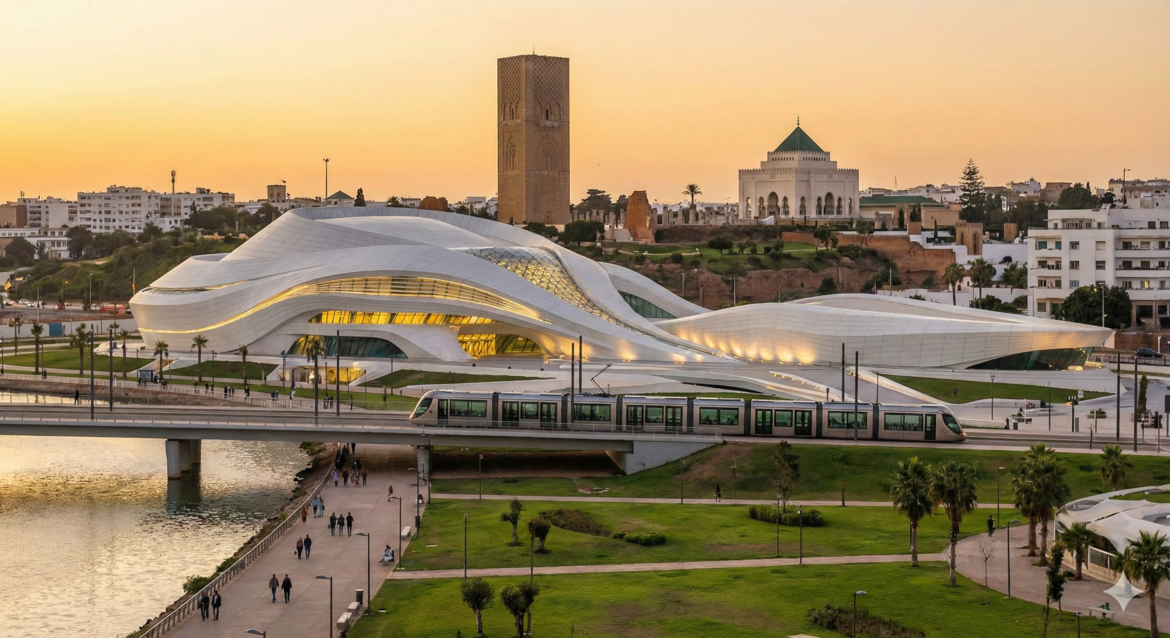
Officially inaugurated in late 2024, this architectural marvel sits on the banks of the Bou Regreg river like a futuristic white wave frozen in time. Designed by the late, legendary Dame Zaha Hadid, the theatre creates a stunning dialogue between the ancient and the avant-garde.

  • The Architecture: The building’s fluid, curvilinear design mimics the flow of the river itself, avoiding sharp corners in favor of “liquid” geometry. It is a stark, brilliant contrast to the unfinished 12th-century Hassan Tower just across the valley.
  • The Experience: This isn’t just a building; it is a cultural campus. With a 1,800-seat theatre and a 7,000-seat open-air amphitheater, it hosts everything from opera to Moroccan symphonic music.
  • Why Go: Even if you don’t catch a show, walking the landscaped grounds at sunset—where the white curves of the theatre meet the golden light of the Atlantic—is a photographer’s dream.

MMVI: The Temple of Modern Moroccan Identity

For a long time, “Moroccan art” to the outside world meant carpets, ceramics, and zellige tilework. The Mohammed VI Museum of Modern and Contemporary Art (MMVI) changed that conversation forever.

Opened in 2014 and celebrating over a decade of influence, the MMVI was the first major museum in the kingdom dedicated entirely to modern art. This is where you go to understand the Moroccan mind, not just its history.

  • What to See: The collection moves from the figurative paintings of the early 20th century to the abstract, rebellious works of the “Casablanca School” (featuring masters like Farid Belkahia and Mohamed Melehi).
  • The Vibe: The museum feels cosmopolitan and fresh. It regularly hosts blockbuster international exhibitions—from Picasso to Delacroix—alongside local heavyweights, proving that Rabat is a serious player on the global art stage.

The “Green City”: Urban Zen and The Tramway

Travelers often brace themselves for the stress of Moroccan traffic. Rabat offers a refreshing antidote: Order.

This is one of the few cities in the region where the “Ville Nouvelle” (the modern city built during the French Protectorate) and the ancient medina function in perfect harmony, linked by a sleek, silent, and efficient tramway system.

  • Eco-Capital: Rabat has been dubbed a “Green City” for a reason. Between the Exotic Gardens of Bouknadel (just north of the city) and the vast botanical trials of the Jardin d’Essais, the city breathes.
  • The Walkability Factor: You can take the tram from the pristine Agdal neighborhood right to the walls of the Medina for a few dirhams. It’s clean, safe, and offers a window into the daily life of modern Moroccans—students, civil servants, and artists commuting in peace.

The Imperial Anchor: Where History Meets Future

Rabat’s modernity works only because it is anchored by deep history. The city is a UNESCO World Heritage site, not just for its monuments, but for the fusion of the modern and the historic.

You cannot understand the new Rabat without paying homage to the old:

  • The Kasbah of the Udayas: A fortress within a fortress. Its blue-and-white walls and Andalusian gardens offer a quiet retreat overlooking the Atlantic. It feels like a mini-Chefchaouen, but with sea salt in the air.
  • Chellah Necropolis: A hauntingly beautiful site where Roman ruins sleep beneath Islamic tombstones, all watched over by hundreds of nesting storks. It is a reminder that Rabat has been a capital of civilizations for two millennia.

If You Go: The Moroccofy Pocket Guide

  • Stay: For authentic luxury, book a Riad in the Medina. For modern comfort, the Sofitel Jardin des Roses offers proximity to the new cultural districts.
  • Eat: Don’t miss Dar Naji for traditional localized cuisine, or explore the hip cafes in the Agdal district for a “nous-nous” (half-milk, half-coffee) with the local intelligentsia.
  • The “Secret” Spot: Visit the Mausoleum of Mohammed V at night. The guards are still there, but the crowds are gone, and the lighting on the gold-leaf ceiling is magical.
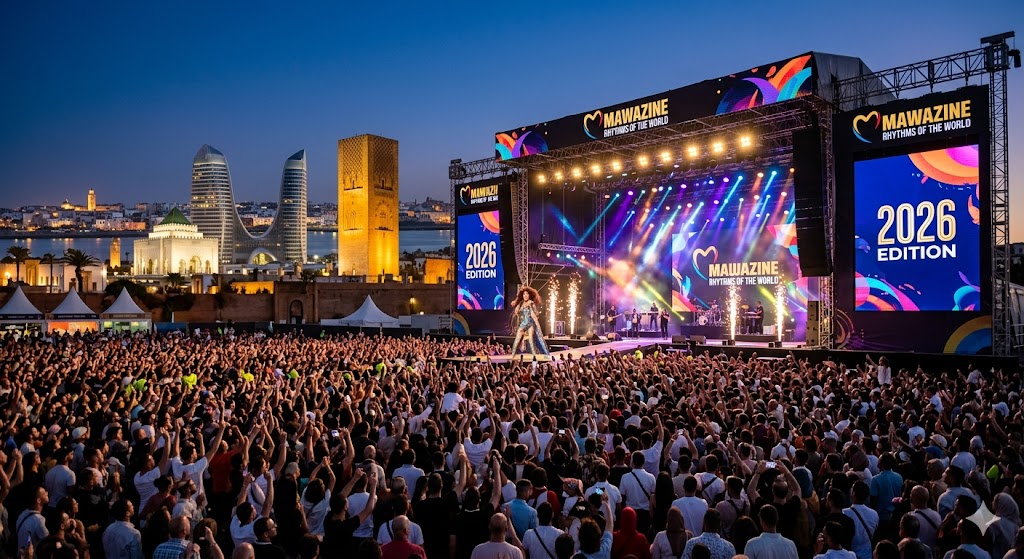
  • Best Time to Visit: Spring (April-May) for the Mawazine Festival (one of the largest music festivals in the world) or October for pleasant weather and art gallery openings.

The Verdict: Marrakech is for the tourist who wants to get lost; Rabat is for the traveler who wants to be found. It is the face of the new Morocco—confident, creative, and undeniably cool.


December 17, 2025 0 comments
0 FacebookTwitterPinterestEmail
moroccan darija
LanguageTravel & Culture

10 Essential Darija Phrases That Will Change Your Trip

by Moroccofy December 4, 2025
written by Moroccofy

To travel through Morocco using only French or English is to view the country through a pane of glass. You will see the sights and buy the rugs, but you may miss the heartbeat of the culture.

Moroccan Arabic, or Darija, is a linguistic mosaic—a fascinating blend of classical Arabic, Amazigh (Berber) syntax, French loanwords, and Spanish influences. It is an oral language, flexible and expressive, built for the marketplace, the café, and the home.

Using these ten phrases is not just about utility; it is a gesture of profound respect. In a culture that values relationship over transaction, speaking Darija signals that you are not just a consumer of tourism, but a participant in the community.

Here are the ten essential phrases that will shift the dynamic of your interactions from transactional to personal.


I. The Foundations of Connection (Greetings & Respect)

In Morocco, you do not simply walk up to a shopkeeper and ask a price. You must first establish a human connection.

1. Salam Alaykum (Peace be upon you)

  • Pronunciation: Sah-lem Ah-lay-kum
  • The Cultural Context: This is the universal opener. It is more than “hello”; it is a blessing.
  • The Pro Move: When saying this, place your right hand flat over your heart. This non-verbal cue signals sincerity and warmth. The response you will hear is Wa Alaykum Salam (And upon you peace).

2. Labas? (How are you / Is everything fine?)

  • Pronunciation: Lah-bass
  • The Cultural Context: In the West, “How are you?” is often a throwaway line. In Morocco, it is a recursive check-in. You might hear it repeated rapidly: “Labas? Kulshi mzyan? Haniya?” (Fine? Everything good? Peaceful?).
  • Usage: Reply with “Labas, alhamdulillah” (Fine, thanks to God). This religious acknowledgement is standard cultural etiquette, regardless of your own faith.

3. Khouya / Khti (Brother / Sister)

  • Pronunciation: Khoo-ya (to a male) / Khtee (to a female)
  • The Game Changer: This is perhaps the most powerful word on this list. It instantly collapses the distance between you and a stranger. It shifts the dynamic from “Tourist vs. Seller” to “Family Member vs. Family Member.”
  • Usage: Instead of “Excuse me, sir,” try “Afak, Khouya” (Please, brother). Watch how the person’s face softens.

II. The Lubricants of Interaction (Politeness & Gratitude)

Moroccan society is high-context and deeply polite. Bluntness can be perceived as rudeness.

4. Afak (Please)

  • Pronunciation: Ah-fack
  • The Cultural Context: You cannot survive without this. It softens every request. Whether asking for the bill, directions, or a little less sugar in your mint tea, frame it with Afak.

5. Shukran (Thank you)

  • Pronunciation: Shook-ran
  • Usage: Use this generously. If someone is particularly helpful, you can upgrade to “Shukran bzaf” (Thanks a lot).
  • Note: If you decline an offer (like a shopkeeper inviting you in), always say “La, shukran” (No, thank you) with a smile. A flat “No” is harsh.

6. Zwin / Zwina (Beautiful / Good / Nice)

  • Pronunciation: Zween (masculine) / Zwee-na (feminine)
  • The Cultural Context: Moroccans love aesthetic beauty and appreciate those who notice it.
  • Usage: Use this to compliment the food (“Tagine zwin!”), the architecture, or a craft. It builds instant rapport. If a shopkeeper shows you something you don’t want to buy, saying “Zwin, walakin…” (It’s beautiful, but…) is a polite way to pivot.

III. The Philosophy of the Street (Negotiation & Outlook)

These phrases help you navigate the souks (markets) and understand the Moroccan worldview.

7. Bshhal? (How much?)

  • Pronunciation: Bsh-hal
  • The Cultural Context: In the souk, there are no price tags. Asking Bshhal? is the opening bell of a negotiation dance, not a confrontation.
  • Usage: Point to an item and ask, “Bshhal, afak?”

8. Mashi Mushkil (No problem)

  • Pronunciation: Mah-shee Moosh-keel
  • The Cultural Context: This is the unofficial motto of Morocco. Bus late? Mashi mushkil. They ran out of chicken? Mashi mushkil. It reflects a stoic, relaxed approach to life’s hiccups.
  • Usage: Use this to diffuse tension. If a waiter apologizes for a delay, smile and say “Mashi mushkil, khouya.” You will immediately be seen as a “cool” traveler, not a high-maintenance tourist.

9. Insha’Allah (God Willing)

  • Pronunciation: In-shah-Allah
  • The Cultural Context: This phrase acknowledges that the future is not in our hands. It is used for any future plan.
  • Usage: “See you tomorrow?” Answer: “Insha’Allah.”
  • Nuance: Westerners sometimes joke that this means “maybe” or “never,” but culturally, it is a genuine submission to destiny.

IV. The Farewell

10. Bslama (Go in peace / Goodbye)

  • Pronunciation: Bs-lah-mah
  • The Cultural Context: Literally translating to “with safety,” it is a wish for your protection as you leave.
  • Usage: Always say this when leaving a shop, taxi, or restaurant. It provides proper closure to the interaction.

Summary Table: The “Cheat Sheet”

PhrasePronunciationMeaningContext
Salam AlaykumSah-lem Ah-lay-kumPeace be upon youUniversal greeting.
Labas?Lah-bassHow are you?Friendly check-in.
Khouya / KhtiKhoo-ya / KhteeBrother / SisterTop Tip: Creates instant intimacy.
AfakAh-fackPleaseEssential politeness.
ShukranShook-ranThank youGratitude.
Bshhal?Bsh-halHow much?Starting a purchase.
Mashi MushkilMah-shee Moosh-keelNo problemDiffusing tension.
ZwinZweenBeautiful/GoodComplimenting.
Insha’AllahIn-shah-AllahGod willingFuture plans.
BslamaBs-lah-mahGoodbye (With safety)Departing.

Final Thought: The Power of Effort

You do not need to speak perfect Darija. Moroccans are famously polyglot and accustomed to code-switching. However, the effort you make to speak their “heart language” is viewed as a sign of humility.

When you call a waiter Khouya instead of just waving your hand, or when you tell a taxi driver Mashi mushkil when traffic is bad, you stop being a spectator. You become a part of the scene.


Would you like me to create a follow-up guide on “The Art of Bargaining in the Souk” using these phrases, or perhaps a deep dive into Moroccan Dining Etiquette?

December 4, 2025 0 comments
0 FacebookTwitterPinterestEmail
Fez vs. Marrakech: Choosing Your Imperial City Adventure
History & HeritageTravel & Culture

Fez vs. Marrakech: Choosing Your Imperial City Adventure

by Moroccofy December 4, 2025
written by Moroccofy

In the lexicon of Moroccan travel planning, the most agonizing choice often boils down to a tale of two cities: Fez and Marrakech.

To the uninitiated, they may seem similar—ancient walled medinas, labyrinthine souks, and the call to prayer echoing over tile-roofed horizons. Yet, to the cultural historian, they are diametric opposites. They represent the duality of the Moroccan soul: the introverted, intellectual guardian of tradition (Fez) versus the extroverted, sensory-driven gateway to the Sahara (Marrakech).

If you are currently staring at a map, trying to decide where to cast your lot, this analysis cuts through the travel brochure clichés to examine the historical and atmospheric DNA of Morocco’s two greatest Imperial Cities.


1. The Historical Identity

To understand the vibe, one must understand the origin.

Fez: The Athens of Africa

Founded in the 9th century by the Idrissids, Fez is the spiritual and intellectual heartbeat of the Maghreb. It is a city built on sanctity and scholarship. It houses the University of Al-Qarawiyyin, founded by Fatima al-Fihri in 859 AD—the oldest degree-granting university in the world.

  • The Vibe: Serious, pious, aristocratic, and fiercely protective of its heritage. Fez feels medieval because, in many ways, it still is. It does not bend easily to tourism; you must bend to it.

Marrakech: The Red City

Founded in the 11th century by the Almoravids (nomadic Berber warriors from the desert), Marrakech was built as a trading hub—a “land port” for caravans coming from Timbuktu. It is the city of trade, exchange, and spectacle.

  • The Vibe: Hedonistic, vibrant, chaotic, and cinematic. Marrakech is the “Hollywood” of Morocco. It is painted in ochre (hence the “Red City”) and designed to impress, entertain, and trade.

2. The Medina Experience: Labyrinth vs. Stage

Fez (Fes el-Bali)

The medina of Fez is the world’s largest car-free urban zone. It is a dense, gray-and-white honeycomb of over 9,000 alleyways, some so narrow you must turn sideways to let a donkey pass.

  • The Reality: Getting lost here isn’t a possibility; it is a certainty. Fez is introverted. The high walls hide the beauty; you must knock on doors to see the palaces. It feels secretive and ancient.
  • Best For: The traveler who wants to time-travel. If you want to see artisans tooling leather, hammering copper, or weaving silk exactly as they did 600 years ago, Fez is unrivaled.

Marrakech (The Souks & Jemaa el-Fnaa)

Marrakech’s medina is wider, flatter, and dominated by the Jemaa el-Fnaa, a massive open square that UNESCO declared a Masterpiece of the Oral and Intangible Heritage of Humanity.

  • The Reality: It is a performance. By day, snake charmers and juice vendors; by night, a smoking, grilling, storytelling carnival. The souks are more commercialized than Fez, catering heavily to tourists with trendy basketry, rugs, and décor.
  • Best For: The sensory seeker. It is loud, aggressive, and incredibly fun. It offers a “vacation” energy that the serious Fez lacks.

3. The Palette and The Plate

Culinary Distinction

  • Fez (Fassi Cuisine): Fez is the culinary capital. The food here is refined, often combining sweet and savory flavors (a legacy of Andalusian influence).
    • The Dish to Try: Pastilla. A flaky phyllo pie traditionally stuffed with pigeon (now often chicken), almonds, cinnamon, and sugar.
  • Marrakech (Marrakshi Cuisine): The food is hearty, robust, and influenced by the desert. Street food reigns supreme here.
    • The Dish to Try: Tangia. Not to be confused with Tagine. Tangia is a bachelor’s stew of beef/lamb, preserved lemon, and garlic, slow-cooked in a clay urn in the embers of a hammam furnace.

Visual Esthetics

  • Fez: Defined by intricate Zellij (mosaic tilework), carved cedar wood, and stucco. It is a masterpiece of Marinid architecture. The palette is blue (cobalt) and green.
  • Marrakech: Defined by Tadelakt (polished limestone plaster), lush gardens (like the Majorelle), and palm trees. The palette is terracotta red, bright blue, and dusty yellow.

4. Beyond the Walls: Day Trips & Geography

Geography often dictates the decision for travelers with limited time.

Choose Fez if you want to visit…Choose Marrakech if you want to visit…
Chefchaouen: The famous Blue Pearl is a manageable (though long) day trip or transfer from Fez.The Sahara Desert: Marrakech is the primary gateway to the High Atlas and the dunes of Merzouga (though still a long drive).
Volubilis & Meknes: The best Roman ruins in Morocco and the “Versailles of Morocco” are just an hour away.Essaouira: A breezy, Portuguese-influenced coastal town perfect for escaping the heat.
Middle Atlas: Cedar forests and Barbary macaque monkeys.High Atlas Mountains: Hiking Toubkal or visiting Berber villages in the Ourika Valley.

5. The Verdict: Which one is for you?

Choose FEZ if:

  • You are a history buff, an architecture nerd, or a spiritual seeker.
  • You prefer “authenticity” over “luxury.”
  • You don’t mind grit, donkeys, and navigating complex spaces.
  • You want to shop for high-quality traditional crafts (leather, pottery, metalwork) directly from the source.
  • You prefer a slightly cooler, mountain climate (though summers are still hot).

Choose MARRAKECH if:

  • You are planning a honeymoon, a girls’ trip, or a luxury getaway.
  • You want access to world-class nightlife, fusion restaurants, and concept stores.
  • You want a mix of culture and relaxation (Marrakech has incredible pools and spas).
  • You want to see the desert or the High Atlas mountains.
  • You are traveling with children (the visual spectacle is more engaging for kids than the density of Fez).

Moroccofy’s Final Thought

If you can, do both. The train ride between them is about 6.5 hours and offers a transition through the changing landscapes of the Kingdom.

But if you must choose: Marrakech appeals to the heart; Fez appeals to the mind. Marrakech will seduce you with its rhythm; Fez will command your respect with its silence.


December 4, 2025 0 comments
0 FacebookTwitterPinterestEmail
Moroccan Etiquette 101
Practical TravelTravel & Culture

Moroccan Etiquette 101: Tipping, Haggling, and What to Wear to Respect Local Culture

by Moroccofy December 4, 2025
written by Moroccofy

Morocco is a country of dizzying sensory depth. It is a place where the scent of burnt amber mixes with diesel fumes, and where the call to prayer harmonizes with the frenetic energy of the souk. For the visitor, this vibrancy is intoxicating, but the social choreography behind it can be opaque.

To truly experience Morocco—not just as a tourist, but as a welcomed guest—one must understand the unspoken rules that govern daily life. These are not merely lists of “dos and don’ts,” but reflections of deep-seated values: Hshouma (propriety/shame), Karam (generosity), and the importance of face-to-face connection.

Here is your investigative guide to the three pillars of Moroccan tourist etiquette: The Deal, The Tip, and The Look.


I. The Souk is a Stage: The Art of Haggling

In the West, a price tag is a statement of fact. In the Moroccan medina, a price is merely an opening opening line in a theatrical dialogue. Haggling is not an argument; it is a social ritual derived from centuries of caravan trade where the relationship between buyer and seller mattered as much as the goods.

The Cultural Context

Merchants in the souk enjoy the game. If you pay the first price asked, you haven’t just lost money; you have arguably deprived the merchant of the interaction. However, this applies mostly to carpets, leather goods, brass, and souvenirs. Groceries and fixed-price boutiques (prix fixe) are exceptions.

How to Navigate the Negotiation

  1. The feigned disinterest: Never show too much enthusiasm for the item you truly want. Inspect a few other items first.
  2. The “Third” Rule: A common rule of thumb is to aim for roughly 30% to 50% off the opening price, depending on how inflated the start is.
  3. The Walk-Away: This is your most powerful tool. If the price isn’t right, smile, thank them (“Shukran“), and slowly walk away. 80% of the time, the price will drop dramatically before you take three steps.
  4. The Tea: If you are buying a high-value item (like a rug), you may be offered mint tea. Accepting it does not obligate you to buy, but it does obligate you to be polite. It shifts the dynamic from business to hospitality.

Journalist’s Note: Do not haggle over pennies. If the difference is 10 Dirhams ($1 USD) and the artisan has spent 20 minutes with you, concede the price. It means little to you, but it matters to the local economy.


II. The Micro-Economy of Gratitude: Tipping

Tipping in Morocco is less of a bonus and more of a decentralized salary system. Many service workers—from the man who guides your car into a spot to the bathroom attendant—rely almost entirely on tips to survive.

The Terminology

You will hear the word Bakshish. Historically, this could imply a bribe to get things done, but in the context of tourism, it simply means a tip. A more polite term to use is Pourboire (French) or simply “tipping.”

The Going Rates (The “Cheat Sheet”)

Carrying small change (coins) is arguably the most important travel hack for Morocco.

ServiceSuggested Tip (MAD)Context
Restaurants10% of the billStandard for good service. Check if service is included (rare).
Cafes2–5 DhsRound up the bill or leave loose change on the tray.
Garder (Car Guard)2–5 Dhs (Day) / 10-20 Dhs (Night)These men in fluorescent vests ensure your car isn’t scratched or towed.
Bellhop/Porter10–20 DhsPer bag, depending on the weight and stairs involved.
Public Restrooms1–2 DhsUsually paid to the attendant at the entrance for toilet paper/maintenance.
Riads/Hotels50–100 DhsAt the end of your stay for the general housekeeping staff.

III. Modesty as Currency: What to Wear

The question of dress code often causes anxiety for Western travelers. Morocco is a dichotomy: walk through the Gueliz district of Marrakech and you will see Moroccan women in crop tops and high heels; travel 20 minutes to a rural village, and full coverage is the norm.

The guiding principle here is Hshouma (Shame/Embarrassment). You want to avoid dressing in a way that causes second-hand embarrassment to families or elders.

For Women

You do not need to wear a headscarf (hijab) unless you are entering one of the few mosques open to non-Muslims (like the Hassan II Mosque in Casablanca).

  • The Golden Rule: Shoulders to knees.
  • The Strategy: Loose-fitting linen trousers, maxi skirts, and tunics are perfect. They are culturally respectful and keep you cool in the heat. A light scarf (pashmina) in your bag is the ultimate tool—throw it over your shoulders if you feel the gaze of the crowd is too intense.
  • Swimwear: Bikinis are perfectly fine at hotel pools and private beaches. On public beaches, you will notice most local women swim fully clothed; while you can wear a swimsuit, a cover-up is recommended when leaving the water.

For Men

  • The Shorts Debate: In the West, shorts are for heat. In traditional Moroccan culture, grown men generally wear long trousers. While tourists wearing shorts are accepted, wearing knee-length (or longer) shorts is preferred over short athletic shorts.
  • Evening Wear: If you are dining out or exploring the old Medina at night, long pants and a collared shirt or nice t-shirt command more respect.
  • Sleeveless Shirts: Generally avoid tank tops (singlets) in city centers; they are viewed as underwear by the older generation.

IV. The Unspoken Basics: The “Right” Way

Beyond the “big three” topics above, two small gestures will mark you as a culturally savvy traveler:

  1. The Right Hand Rule: In Islamic culture, the left hand is reserved for personal hygiene. The right hand is for eating (especially tagine with bread), shaking hands, and handing over money. Always offer money with your right hand.
  2. The Heart Gesture: When you decline a tout or a shopkeeper, place your right hand over your heart, smile, and say “La, Shukran” (No, thank you). This gesture softens the rejection, turning it into a sign of respect rather than dismissal.

December 4, 2025 0 comments
0 FacebookTwitterPinterestEmail
Arts & EntertainmentLife & Traditions

The Haunting Beat of Gnawa Music: History, Instruments, and Where to Hear It Live

by Moroccofy December 3, 2025
written by Moroccofy

In the winding alleyways of the Essaouira medina, long after the tourists have retreated to their riads, a sound begins to pulse against the limestone walls. It is not a melody, but a heartbeat. It is the metallic clatter of iron castanets—qraqeb—mimicking the sound of galloping horses or, as history suggests, the rattling of chains. Beneath it runs the low, resonant thrum of the guembri, a three-stringed bass that seems to vibrate the very floorboards.

This is Gnawa. Once the clandestine ritual of marginalized, enslaved people, it has risen to become Morocco’s most internationally celebrated musical export and a UNESCO Intangible Cultural Heritage of Humanity. But to understand Gnawa, one must look past the festival stages and into the history of a people who used music to survive.


The Roots: From the Sahel to the Maghreb

Gnawa is not indigenous to Morocco in the strictest sense; it is a diasporic treasure born of tragedy and resilience. The origins of the Gnawa people trace back to the Bilad al-Sudan (Land of the Blacks)—specifically the empires of Mali, Guinea, and Ghana.

Between the 11th and 19th centuries, trans-Saharan trade routes brought gold, salt, and enslaved Sub-Saharan Africans to Morocco. Severed from their homelands and forced into servitude, these populations amalgamated their animist traditions with the Islam of their new masters.

The Syncretic Shield

To preserve their spiritual identity without persecution, the Gnawa practiced a form of religious syncretism. They draped their West African spirits (mlouk) in the robes of Islamic saints (marabouts).

  • Bambara, Hausa, and Fulani rhythms were preserved.
  • Bilal ibn Rabah, the first Muezzin of Islam and a former Ethiopian slave, was adopted as their spiritual patron.

Thus, Gnawa became a brotherhood of healing—a musical Sufism where the goal was not just entertainment, but deliverance.


The Trinity of Sound: Instruments of the Trance

The distinct “haunting” quality of Gnawa music comes from its minimalist yet hypnotic instrumentation. The ensemble creates a dense texture of rhythm that is designed to induce a trance state (jadba).

1. The Guembri (The Soul)

The guembri (or sintir) is a three-stringed rectangular lute, the size of a guitar but with the register of a double bass.

  • Construction: The body is carved from a single log of wood (often walnut or mahogany) and covered in camel skin. The neck is a simple stick, and the strings are made of sheep gut.
  • Significance: It is the “master’s” instrument. The percussive thud of the player’s thumb on the camel skin acts as a drum, while the strings provide the melody. It represents the boat that carried ancestors away from their home.

2. The Qraqeb (The Iron Chains)

These are heavy, double-sided metal castanets held in the hand.

  • Sound: A relentless, metallic triplet rhythm that drives the music forward.
  • Symbolism: Historians and musicians alike assert that the qraqeb represent the shackles worn by enslaved ancestors. By turning the sound of bondage into the rhythm of music, the Gnawa reclaimed their agency.

3. The Tbel (The Announcement)

A large, double-headed drum played with curved sticks, usually reserved for the Dakhla (the opening procession) or specific phases of the ritual to summon the spirits.


The Lila: A Night of Healing

While Gnawa is now performed in concert halls, its true context is the Lila (Arabic for “Night”). This is a dusk-till-dawn ritual of healing, usually held in a private home to address a spiritual crisis or cure a scorpion sting of the soul.

The Maâlem (Master Musician) leads the ceremony. It is structured into a precise progression of colors and incense, each corresponding to a specific spirit (mlouk):

  • White: For peace and the saints.
  • Black: For the forest spirits (Sidi Mimoun).
  • Blue: For the sky and sea (Sidi Moussa).
  • Red: For blood and thunder.

Note on Cultural Sensitivity: During a Lila, participants may enter a deep trance. This is considered a sacred moment of communion, not a spectacle. If invited to an authentic Lila, respect and silence are paramount.


From Marginalization to “Moroccan Jazz”

For centuries, Gnawa was looked down upon by orthodox society as “folk magic.” The shift began in the late 20th century, largely fueled by Western musicians seeking new sounds.

  • The 1960s & 70s: Legends like Jimmy Page and Robert Plant (Led Zeppelin), Jimi Hendrix, and jazz giant Randy Weston traveled to Morocco. They found in Gnawa a “primal blues,” a musical cousin to the African-American spirituals.
  • Fusion: This interaction birthed “Jazz-Gnawa,” blending the pentatonic scales of the Guembri with the improvisation of Saxophone and Piano.

Today, modern bands like Bab L’ Bluz and Innov Gnawa (NYC-based) are electrifying the genre, adding rock distortion and female vocals to a traditionally male-dominated sphere.


Where to Hear It Live: A Traveler’s Guide

To experience Gnawa is to feel the vibration in your chest. Here are the best places to witness this art form, ranging from the festival stage to intimate courtyards.

1. The Gnaoua World Music Festival (Essaouira)

  • The Context: Known as the “Moroccan Woodstock.” Held annually (usually in June), this is the Mecca of Gnawa.
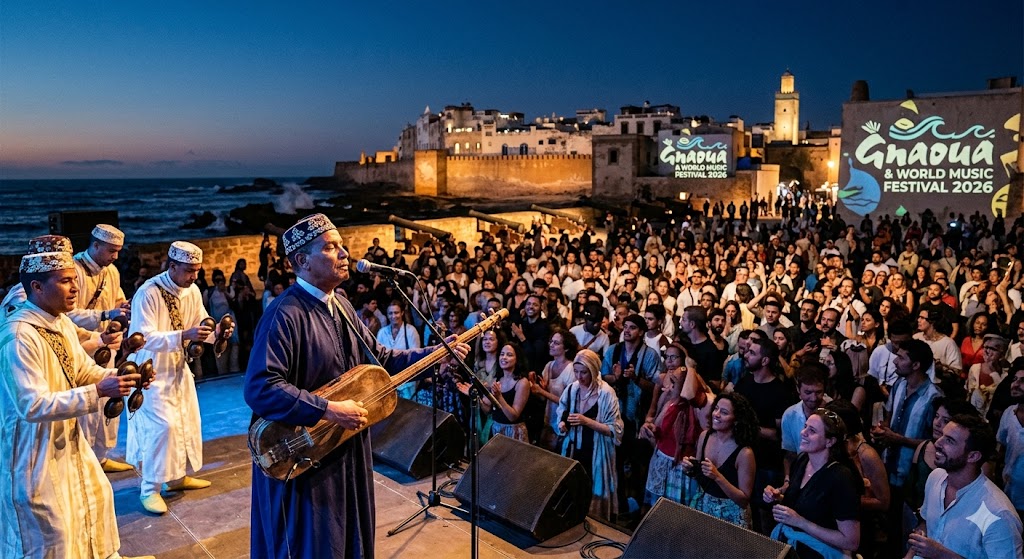
  • The Experience: Hundreds of thousands fill the streets. You will see grand stage collaborations between Gnawa Maâlems and international Jazz/Pop stars, followed by intimate acoustic “lilas” in small zawiyas (shrines) around the city.
  • Best For: The energy of the crowd and world-class fusion.

2. Café Clock (Marrakech & Fes)

  • The Context: A cross-cultural hub famous for preserving heritage.
  • The Experience: They host regular “Gnawa Sunset” sessions. It is accessible, explanatory, and perfect for the uninitiated. You can sit inches away from the Maâlem, sipping mint tea while the sun sets over the medina.
  • Best For: Intimacy and educational context.

3. Dar Gnawa (Tangier)

  • The Context: Tangier has a unique Gnawa style (northern school), influenced by its proximity to Spain and jazz history.
  • The Experience: Founded by the legendary Maâlem Abdullah El Gourd (who collaborated with Randy Weston). It is a center for learning and preservation.
  • Best For: Hardcore music history buffs.

Conclusion

Gnawa is more than a genre; it is a sonic archive. It remembers the pain of the Trans-Saharan slave trade, but it refuses to be defined by it. Instead, through the rattle of the qraqeb and the rumble of the guembri, it transforms that pain into a celebration of survival. Whether you hear it on a massive stage in Essaouira or in a dimly lit room in Marrakech, the result is the same: the beat gets inside you, and for a moment, you are free.


December 3, 2025 0 comments
0 FacebookTwitterPinterestEmail
Ramadan in Morocco: The Ultimate Cultural & Travel Guide
FestivalsLife & Traditions

Ramadan in Morocco: The Ultimate Cultural & Travel Guide

by Moroccofy December 3, 2025
written by Moroccofy

Planning a trip to Morocco during Ramadan? Discover essential travel tips, cultural traditions, food guides (Ftour), and the dos and don’ts for tourists in this expert guide.

To visit Morocco during Ramadan is to witness the country’s heart beating at a different rhythm. It is a time when the chaotic energy of the souks softens into spiritual contemplation, only to erupt nightly into a symphony of communal feasting.

For the cultural historian, it is a window into the soul of the Maghreb; for the traveler, it is a unique experience that rewards patience with unparalleled hospitality. But what does traveling to Morocco during Ramadan really look like? From the Ftour table to public etiquette, here is everything you need to know.


What is Ramadan in Morocco?

Ramadan is the ninth month of the Islamic lunar calendar, a period of fasting from dawn until sunset. In Morocco, it is far more than a prohibition on food and water. It is a total recalibration of social time, culinary heritage, and public behavior.

The Atmosphere: A Shift in Time

The atmosphere in a Moroccan city during the holy month is distinct. The days are slower, marked by a collective conservation of energy. As the sun begins its descent, however, the air changes.

The Ritual of Sunset (The Zowaka)

In many cities, the break of the fast is announced not just by the Adhan (call to prayer), but by the Zowaka—an air raid siren or, traditionally, a cannon shot. Walking through a bustling Medina like Fes or Marrakech just minutes before sunset is a surreal experience. The streets, usually choked with motorbikes, become ghost towns.

Then, the cannon fires. The muezzin calls. Simultaneously, millions of spoons clink against bowls. The collective unity of that moment is palpable.

The Nafar: The Traditional Town Crier

While modern alarm clocks exist, tradition persists in the form of the Nafar. Dressed in a traditional gandoura, this town crier walks the neighborhood alleys before dawn, beating a drum to wake residents for Suhoor (the pre-dawn meal).

Traveler Note: If you hear drumming at 3:00 AM, do not be alarmed. It is a beautiful, centuries-old tradition reminding the faithful that community supports the individual.

[Image: Close up of a traditional Moroccan brass lantern and a glass of mint tea. Alt Text: Traditional Moroccan Ramadan lantern and tea setting.]


Moroccan Ramadan Food: The Art of Ftour

The breaking of the fast, known as Ftour (or Iftar), is not merely a meal; it is a meticulously choreographed ritual. The Moroccan Ftour table is a testament to the country’s agricultural richness and Andalusian culinary influences.

1. The Essentials: Dates and Harira

Following the Sunnah, the fast is broken with dates and water or milk to gently restore blood sugar. This is immediately followed by Harira, the national soup of Morocco.

  • What is Harira? A velvety, tomato-based soup thickened with flour and packed with lentils, chickpeas, vermicelli, and fresh herbs (celery, parsley, coriander). It is the taste of Ramadan.

2. Sweet and Savory Delights

Moroccan cuisine excels at mixing sweet and salty profiles.

  • Chebakia: A flower-shaped cookie, fried until golden, soaked in honey, and sprinkled with sesame seeds. It is a caloric powerhouse designed to energize.
  • Sellou (Sfouf): A rich, nutty paste made from toasted flour, almonds, and spices.
  • The Breads: Tables are laden with Msemmen (flaky pancakes), Baghrir (semolina pancakes), and Batbout.

Is it Safe and Easy to Travel to Morocco During Ramadan?

Yes. However, it requires adjustment. You are entering a society in a state of heightened spiritual discipline. Here are the practical Ramadan travel tips you need.

The Golden Rule: Public Consumption

Do not eat, drink, or smoke in public during daylight hours.

While non-Muslims are not expected to fast, consuming food in front of those who are abstaining is considered highly disrespectful.

  • The Law: Article 222 of the Moroccan Penal Code prohibits Muslim citizens from breaking the fast in public.
  • Advice for Tourists: Eat inside your hotel, or in restaurants that have screened-off sections specifically for tourists.

Changing Schedules

  • Opening Hours: Museums and historical sites often open later (around 10:00 AM) and close earlier (around 3:00 PM or 4:00 PM).
  • The “Rush Hour” Warning: The hour immediately preceding sunset is chaotic on the roads as taxi drivers rush home to eat. Avoid being in transit during this 60-minute window.
  • Dinner Time: Most restaurants close during Ftour (sunset) for about an hour. They reopen afterward with renewed energy.

Alcohol Availability

Sales of alcohol are restricted. Liquor sections in supermarkets are often cordoned off. High-end hotels and licensed tourist restaurants may still serve alcohol, but it is best to check in advance.


Frequently Asked Questions (FAQ)

Does everything close in Morocco during Ramadan?

No. While the pace is slower and shops may close for the hour of Ftour (sunset), the cities come alive at night. Souks and shops often stay open until 1:00 AM or 2:00 AM.

Can tourists drink water in public?

It is best to be discreet. Carry a water bottle in your bag and take a sip in a secluded corner or indoors, rather than walking down the street drinking openly.

Is it a good time to visit?

If you want culture, yes. It is the best time to see the spiritual side of Morocco. If you want a party atmosphere or seamless service, you may prefer another month.


Conclusion

Visiting Morocco during Ramadan is for the traveler seeking connection. It is a time when the veil between the sacred and the profane is thin. If you navigate it with sensitivity, you will find that Moroccans—already known for their warmth—are even more generous during this month.

December 3, 2025 0 comments
0 FacebookTwitterPinterestEmail
The Battle of the Botanicals: Argan vs. Prickly Pear
Life & TraditionsNatural Wellness

The Battle of the Botanicals: Argan vs. Prickly Pear

by Moroccofy December 3, 2025
written by Moroccofy

In the arid, sun-drenched landscapes of southern Morocco, survival is an art form. It is here, among the rocky foothills of the Anti-Atlas mountains and the sweeping valleys of the Souss, that nature has produced two of the world’s most potent skincare ingredients.

For decades, Argan Oil has reigned supreme as the global face of Moroccan beauty—a ubiquitous “Liquid Gold” found in everything from high-end serums to drugstore shampoos. But in recent years, a challenger has emerged from the humble cactus: Prickly Pear Seed Oil.

As a cultural historian and investigative journalist, I have looked beyond the marketing gloss to understand not just the dermatological differences between these oils, but the botanical, historical, and socio-economic narratives that define them.


The Veteran: Argan Oil (Argania spinosa)

To understand Argan oil, one must understand the Amazigh (Berber) soul. The Argan tree is endemic to Morocco, specifically the UNESCO-protected biosphere reserve in the southwest. For centuries, before it was a global commodity, it was a staple of the indigenous pantry—used for dipping bread, dressing couscous, and fueling lamps.

The Extraction Process

Traditional extraction is a rhythm of life in the villages. Amazigh women sit on the floor, cracking the hard nuts between two stones to reveal the kernels inside.

  • Culinary Argan: The kernels are roasted before pressing, giving the oil a nutty, distinct flavor.
  • Cosmetic Argan: The kernels are cold-pressed raw to preserve the fatty acids and vitamins.

The Profile

Argan oil is balanced. It is rich in Vitamin E (Tocopherol), phenols, and carotenes. Its fatty acid profile is roughly balanced between oleic and linoleic acids.

Best For:

  • General hydration for hair and body.
  • Acne-prone skin (due to its non-comedogenic nature).
  • Sealing in moisture.

The Challenger: Prickly Pear Seed Oil (Opuntia ficus-indica)

If Argan is the “Liquid Gold,” Prickly Pear Seed Oil (often called Barbary Fig oil or Hindiyya in Darija) is the “Platinum.” While the cactus itself—introduced to Morocco centuries ago—is common, the oil derived from its seeds is the most expensive carrier oil on the global market.

The “Miracle” Economics

Why the high price tag? It is a matter of yield.

The Yield Ratio: To produce just one liter of Prickly Pear Seed Oil, cooperatives must process nearly one ton of fruit. Each fruit contains small, hard seeds that must be separated, washed, dried, and cold-pressed. It is an excruciatingly labor-intensive process.

The Profile

Prickly Pear is a powerhouse. It contains 150% more Vitamin E than Argan oil. However, its secret weapon is Vitamin K (rare in plant oils) and betalains (super-antioxidants). It also has a much higher concentration of linoleic acid (Omega 6).

Best For:

  • Anti-Aging: The high Vitamin E content stimulates collagen production.
  • Dark Circles: Vitamin K is known to brighten hyperpigmentation and under-eye circles.
  • Absorption: It is a “dry oil,” meaning it sinks into the skin almost instantly without a greasy residue.

Head-to-Head: The Breakdown

To help you decide which indigenous elixir suits your needs, I have compiled a comparative analysis.

FeatureArgan OilPrickly Pear Seed Oil
TextureRich, silky, slightly viscous.Extremely light, “dry,” absorbs instantly.
ScentSubtle nutty aroma (if unrefined).Herbal, hay-like, slightly pungent.
Key VitaminVitamin E (High).Vitamin E (Highest) + Vitamin K.
Price PointModerate/Accessible.Luxury/High (approx. 5x the cost of Argan).
Primary UseHair, Body, General Face Moisture.Targeted Face Treatment (Eyes, Wrinkles).
Skin TypeNormal, Dry, Oily (Balances sebum).Mature, Hyperpigmented, Sensitive.

The Socio-Economic Heartbeat

We cannot discuss these oils without acknowledging the hands that make them. Both industries are driven by women’s cooperatives in rural Morocco.

Historically, the commercialization of Argan oil in the 1990s was a sociological revolution. It allowed rural Amazigh women to earn independent income, learn literacy, and gain status within their communities.

The rise of Prickly Pear Seed Oil has expanded this “pink economy” into regions where the Argan tree does not grow, such as the arid plains of Rhamna or the cliffs of Sidi Ifni. When you purchase authentic, cooperative-sourced oil, you are participating in a supply chain that keeps rural Moroccan villages economically viable in the face of droughts and urbanization.


Final Verdict: Which One Should You Choose?

The answer lies in your specific needs:

  1. Choose Argan Oil if: You want a versatile, all-purpose product. If you are looking to treat split ends in your hair, moisturize your body after a hammam, and maintain healthy skin, Argan is the reliable, classic choice.
  2. Choose Prickly Pear Seed Oil if: You have specific skin concerns related to aging or pigmentation. If you are battling dark under-eye circles, fine lines, or sun spots, the high investment in Prickly Pear is scientifically justified.

My Professional Recommendation:

Use them in tandem. Use Prickly Pear Seed Oil as your nightly facial serum (applied to damp skin) to target cellular regeneration. Use Argan Oil for your hair, body, and nails. In doing so, you engage with the full spectrum of Morocco’s botanical heritage.


December 3, 2025 0 comments
0 FacebookTwitterPinterestEmail
Life & TraditionsNatural Wellness

The Sanctity of Steam: Bringing the Moroccan Hammam Home

by Moroccofy December 3, 2025
written by Moroccofy

In the labyrinthine alleyways of Fes, Marrakech, or Tangier, the presence of a hammam is often signaled not by a sign, but by the scent of burning wood and the sight of the farnatchi—the furnace stoker—shoveling sawdust into the fires that heat the water deep underground. For centuries, the Moroccan hammam has been more than a bathhouse; it is a civic institution, a sanctuary of social equalization, and a ritual of profound purification.1

While the communal architecture of the hammam—with its distinct hot, warm, and cool rooms—is difficult to replicate in a modern private residence, the core ritual is portable. It is a process that marries the physical shedding of dead skin with the psychological shedding of stress.

To bring the hammam home is to engage in a deliberate, slowed-down ceremony of self-care.2 It requires specific tools, a specific mindset, and a surrender to the heat.


The Cultural Anatomy of the Ritual

Before turning on the tap, one must understand what the hammam represents. Historians trace its lineage to the Roman thermae, adapted by Islamic civilization to fulfill the religious requirement of major ablution (ghusl) and general cleanliness.3

However, the Moroccan iteration is distinct. Unlike the Turkish bath, which is often steam-heavy and massage-focused, the Moroccan experience centers on the gommage—a vigorous, almost aggressive exfoliation.4

The Great Equalizer

Within the tiled walls of the traditional hammam, social hierarchy dissolves. The rich and the poor sweat together, naked or semi-nude, stripping away status markers along with their clothes. In this humid haze, the only currency is the water you carry in your bucket and the vigor of your scrub.


The Essential Toolkit

You cannot perform a true Moroccan purification with standard drugstore body wash and a loofah. The chemistry of the hammam relies on three pillars:

  1. Sabon Beldi (Black Soap): This is not soap in the Western sense. It is a dark, amber-to-black gel made from macerated olives and potash. Rich in Vitamin E and highly alkaline, it does not foam.5 Its primary function is not just to clean, but to prepare the skin for exfoliation by softening the epidermis and swelling the dead skin cells.
  2. The Kessa (Exfoliating Mitt): A rough, crepe-fabric glove, usually made of granular viscose or rayon.6 It is the engine of the hammam. It provides the friction necessary to roll the dead skin off the body.
  3. Ghassoul (Rhassoul Clay): Mined exclusively in the Moulouya Valley near the Atlas Mountains, this mineral-rich clay is used as a body and face mask to absorb impurities and grease.7

The Ritual: A Step-by-Step Guide

To recreate this experience at home, you must transform your bathroom into a steam chamber.

Phase 1: The Preparation (Steam)

In the traditional hammam, the heat relaxes the muscles and opens the pores.8

  • Create the Atmosphere: Close the windows and door. Run your shower on its hottest setting for 10–15 minutes before entering (don’t waste water; collect it for laundry if possible, or simply bathe in a very hot bath). The goal is to fill the room with steam.
  • The Soak: Enter the warmth. If you have a tub, soak for at least 15 minutes. If you have a shower, stand out of the direct stream but let the warm water and steam envelop you. You must be thoroughly warm before proceeding.

Phase 2: The Anointing (Sabon Beldi)

Once your skin is warm and pores are open:

  • Apply the Soap: Take a handful of Sabon Beldi. It will feel gooey and rich. Massage it over your entire body, from neck to feet.
  • The Wait: This is crucial and often skipped by novices. You must let the soap sit on your skin for 5 to 10 minutes. This allows the alkaline properties to dissolve the bonds holding dead skin cells together.
  • The Rinse: Rinse the soap off completely. The skin must be free of soap residue for the friction of the mitt to work.9

Phase 3: The Gommage (The Scrub)

This is the heart of the ritual.

  • The Motion: Wet your Kessa mitt and wring it out. Using long, firm vertical strokes (avoiding circles), scrub your skin. Start with your arms and legs.
  • The Result: If done correctly, you will see gray, noodle-like rolls of dead skin (colloquially called tousa or oskh) peeling away. It is visually startling but deeply satisfying.
  • Intensity: Be vigorous but respectful of your skin boundaries. The goal is to feel lighter, not raw.

Phase 4: The Purification (Ghassoul)

After rinsing off the dead skin, your fresh layer of skin is exposed and vulnerable.

  • The Mask: Mix Ghassoul clay powder with warm water (and perhaps a dash of rose water or orange blossom water) to create a mud.10 Apply this to your body and face.
  • The Absorption: Let it sit for 5–10 minutes. The clay remineralizes the skin with magnesium and silica while drawing out toxins. Rinse thoroughly.

Phase 5: The Hydration

The scrubbing and clay strip the body of oils, so replenishment is vital.

  • Argan Oil: While your skin is still slightly damp, apply pure Argan oil.11 Known as “liquid gold,” this endemic Moroccan oil seals in moisture without clogging pores.12

Modern Adaptation & Sensory Nuance

While the home bathroom lacks the echoey acoustics and marble slabs of the public bath, you can mimic the sensory landscape.

  • Scent: Traditional black soap often smells of pure olive, but modern versions include eucalyptus.13 The scent of eucalyptus is inextricably linked to the Moroccan hammam; it clears the sinuses and sharpens the mind.
  • Hydration: In Morocco, the ritual is often followed by sipping hot mint tea.14 This rehydrates the body internally after the loss of fluids through sweating.

Conclusion

The Moroccan hammam is not merely a hygiene practice; it is a transition ritual.15 You enter carrying the physical dust of the city and the metaphysical weight of your week. You exit—skin flushed, limbs heavy with relaxation, and body oiled—feeling literally lighter. By recreating this ritual at home, you are not just washing your body; you are participating in a centuries-old tradition of respecting the vessel you live in.


December 3, 2025 0 comments
0 FacebookTwitterPinterestEmail
Newer Posts
Older Posts

Recent Posts

  • The Price of Progress: Casablanca’s Old Medina Faces the Wrecking Ball

    April 28, 2026
  • The Moroccan Paradox: Lifting Trophies While Standing in the Mud

    December 18, 2025
  • Rabat: The Coolest Cultural Capital You’re Skipping

    December 17, 2025

Top Categories

  • Architecture (1)
  • Artisan Crafts (1)
  • Arts & Entertainment (1)
  • City Guides (2)
  • Cuisine & Gastronomy (4)
  • Design & Decor (3)
  • Drinks & Rituals (1)
  • Essential Recipes (3)
  • Festivals (1)
  • History & Heritage (1)
  • Interior Styling (1)
  • Language (1)
  • Life & Traditions (4)
  • Natural Wellness (2)
  • News (2)
  • Practical Travel (1)
  • Rugs (1)
  • Travel & Culture (4)

Get latest news

Subscribe my Newsletter for new blog posts, tips & new photos. Let's stay updated!

Quick links

  • About Us
  • Contact Us
  • Privacy Policy
  • Terms of Use
  • Sitemap

Recent posts

The Price of Progress: Casablanca’s Old Medina Faces the Wrecking Ball
The Moroccan Paradox: Lifting Trophies While Standing in the Mud
Rabat: The Coolest Cultural Capital You’re Skipping

Airhelp

Helps passengers receive ​up​ to €600 in compensation for delayed or canceled flights
Top Posts
The Price of Progress: Casablanca’s Old Medina Faces...
The Moroccan Paradox: Lifting Trophies While Standing in...
Rabat: The Coolest Cultural Capital You’re Skipping
10 Essential Darija Phrases That Will Change Your...
Fez vs. Marrakech: Choosing Your Imperial City Adventure
Moroccan Etiquette 101: Tipping, Haggling, and What to...

@2025 – All Right Reserved. Designed and Developed by Moroccofy.

Moroccofy
  • Design & Decor
  • Cuisine & Gastronomy
  • Travel & Culture
  • Life & Traditions
Moroccofy
  • Design & Decor
  • Cuisine & Gastronomy
  • Travel & Culture
  • Life & Traditions
@2021 - All Right Reserved. Designed and Developed by PenciDesign

Shopping Cart

Close

No products in the cart.

Close