

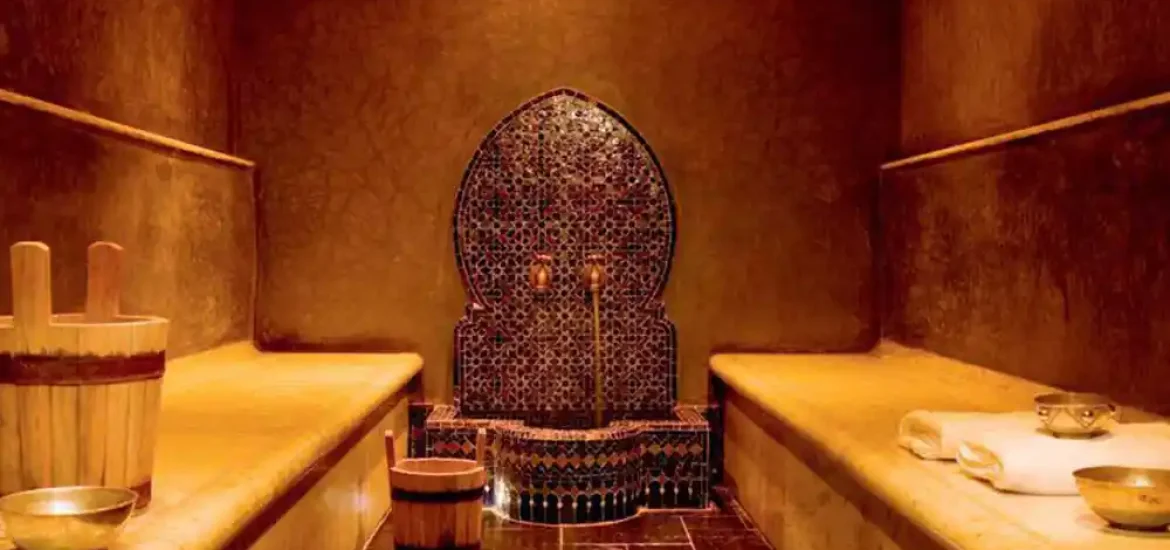
In the labyrinthine alleyways of Fes, Marrakech, or Tangier, the presence of a hammam is often signaled not by a sign, but by the scent of burning wood and the sight of the farnatchi—the furnace stoker—shoveling sawdust into the fires that heat the water deep underground. For centuries, the Moroccan hammam has been more than a bathhouse; it is a civic institution, a sanctuary of social equalization, and a ritual of profound purification.1
While the communal architecture of the hammam—with its distinct hot, warm, and cool rooms—is difficult to replicate in a modern private residence, the core ritual is portable. It is a process that marries the physical shedding of dead skin with the psychological shedding of stress.
To bring the hammam home is to engage in a deliberate, slowed-down ceremony of self-care.2 It requires specific tools, a specific mindset, and a surrender to the heat.
The Cultural Anatomy of the Ritual
Before turning on the tap, one must understand what the hammam represents. Historians trace its lineage to the Roman thermae, adapted by Islamic civilization to fulfill the religious requirement of major ablution (ghusl) and general cleanliness.3
However, the Moroccan iteration is distinct. Unlike the Turkish bath, which is often steam-heavy and massage-focused, the Moroccan experience centers on the gommage—a vigorous, almost aggressive exfoliation.4
The Great Equalizer
Within the tiled walls of the traditional hammam, social hierarchy dissolves. The rich and the poor sweat together, naked or semi-nude, stripping away status markers along with their clothes. In this humid haze, the only currency is the water you carry in your bucket and the vigor of your scrub.
The Essential Toolkit
You cannot perform a true Moroccan purification with standard drugstore body wash and a loofah. The chemistry of the hammam relies on three pillars:
- Sabon Beldi (Black Soap): This is not soap in the Western sense. It is a dark, amber-to-black gel made from macerated olives and potash. Rich in Vitamin E and highly alkaline, it does not foam.5 Its primary function is not just to clean, but to prepare the skin for exfoliation by softening the epidermis and swelling the dead skin cells.
- The Kessa (Exfoliating Mitt): A rough, crepe-fabric glove, usually made of granular viscose or rayon.6 It is the engine of the hammam. It provides the friction necessary to roll the dead skin off the body.
- Ghassoul (Rhassoul Clay): Mined exclusively in the Moulouya Valley near the Atlas Mountains, this mineral-rich clay is used as a body and face mask to absorb impurities and grease.7
The Ritual: A Step-by-Step Guide
To recreate this experience at home, you must transform your bathroom into a steam chamber.
Phase 1: The Preparation (Steam)
In the traditional hammam, the heat relaxes the muscles and opens the pores.8
- Create the Atmosphere: Close the windows and door. Run your shower on its hottest setting for 10–15 minutes before entering (don’t waste water; collect it for laundry if possible, or simply bathe in a very hot bath). The goal is to fill the room with steam.
- The Soak: Enter the warmth. If you have a tub, soak for at least 15 minutes. If you have a shower, stand out of the direct stream but let the warm water and steam envelop you. You must be thoroughly warm before proceeding.
Phase 2: The Anointing (Sabon Beldi)
Once your skin is warm and pores are open:
- Apply the Soap: Take a handful of Sabon Beldi. It will feel gooey and rich. Massage it over your entire body, from neck to feet.
- The Wait: This is crucial and often skipped by novices. You must let the soap sit on your skin for 5 to 10 minutes. This allows the alkaline properties to dissolve the bonds holding dead skin cells together.
- The Rinse: Rinse the soap off completely. The skin must be free of soap residue for the friction of the mitt to work.9
Phase 3: The Gommage (The Scrub)
This is the heart of the ritual.
- The Motion: Wet your Kessa mitt and wring it out. Using long, firm vertical strokes (avoiding circles), scrub your skin. Start with your arms and legs.
- The Result: If done correctly, you will see gray, noodle-like rolls of dead skin (colloquially called tousa or oskh) peeling away. It is visually startling but deeply satisfying.
- Intensity: Be vigorous but respectful of your skin boundaries. The goal is to feel lighter, not raw.
Phase 4: The Purification (Ghassoul)
After rinsing off the dead skin, your fresh layer of skin is exposed and vulnerable.
- The Mask: Mix Ghassoul clay powder with warm water (and perhaps a dash of rose water or orange blossom water) to create a mud.10 Apply this to your body and face.
- The Absorption: Let it sit for 5–10 minutes. The clay remineralizes the skin with magnesium and silica while drawing out toxins. Rinse thoroughly.
Phase 5: The Hydration
The scrubbing and clay strip the body of oils, so replenishment is vital.
- Argan Oil: While your skin is still slightly damp, apply pure Argan oil.11 Known as “liquid gold,” this endemic Moroccan oil seals in moisture without clogging pores.12
Modern Adaptation & Sensory Nuance
While the home bathroom lacks the echoey acoustics and marble slabs of the public bath, you can mimic the sensory landscape.
- Scent: Traditional black soap often smells of pure olive, but modern versions include eucalyptus.13 The scent of eucalyptus is inextricably linked to the Moroccan hammam; it clears the sinuses and sharpens the mind.
- Hydration: In Morocco, the ritual is often followed by sipping hot mint tea.14 This rehydrates the body internally after the loss of fluids through sweating.
Conclusion
The Moroccan hammam is not merely a hygiene practice; it is a transition ritual.15 You enter carrying the physical dust of the city and the metaphysical weight of your week. You exit—skin flushed, limbs heavy with relaxation, and body oiled—feeling literally lighter. By recreating this ritual at home, you are not just washing your body; you are participating in a centuries-old tradition of respecting the vessel you live in.