

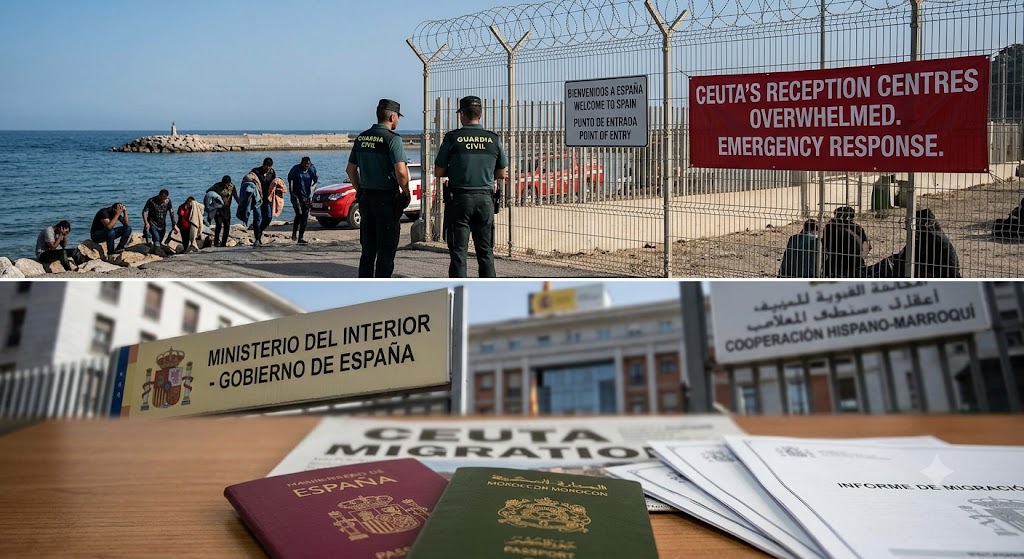
CEUTA / MADRID / RABAT — A sudden surge of migrants crossing from Morocco into the Spanish enclave of Ceuta has once again placed one of Europe’s most sensitive borders at the center of a political and humanitarian debate. Thousands of people have reportedly reached the Spanish territory over the past two days, overwhelming local authorities and forcing emergency measures as reception facilities struggle to cope.
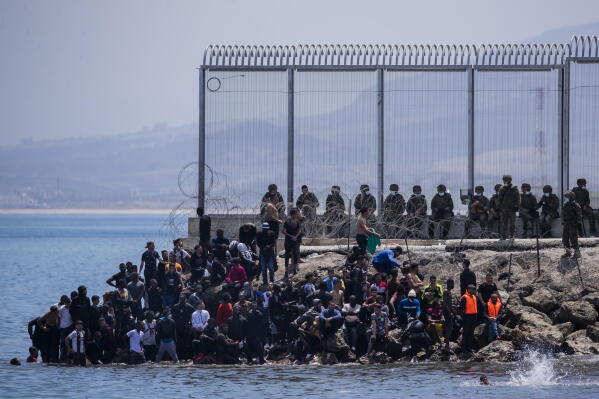
The scenes are strikingly familiar. Migrants swimming around the Tarajal breakwater, exhausted families arriving on Spanish beaches, and local officials warning that public services have reached their limits all evoke memories of May 2021, when approximately 8,000 to 10,000 people entered Ceuta within days during one of the most serious diplomatic crises between Spain and Morocco in recent history.
While today’s events have prompted renewed accusations that Morocco is once again using migration as a political instrument, the evidence currently available paints a more nuanced picture.
Echoes of the 2021 Crisis
The comparison with 2021 is unavoidable.
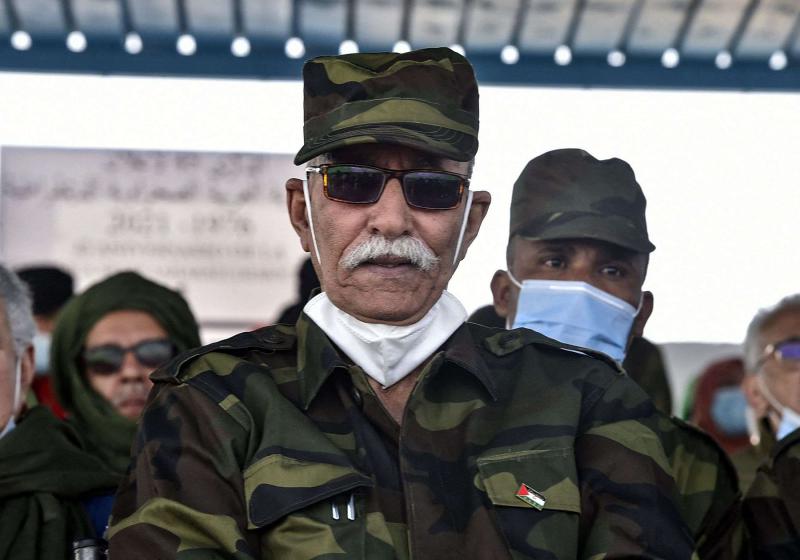
Five years ago, Spain’s decision to admit Polisario Front leader Brahim Ghali for medical treatment triggered a sharp deterioration in relations with Rabat. During the ensuing diplomatic dispute, thousands of migrants crossed into Ceuta after Moroccan border forces were widely reported to have relaxed enforcement. The episode prompted Spain to deploy troops and quickly escalated into a European diplomatic issue.
That crisis fundamentally changed how European policymakers viewed migration along the Morocco–Spain border. It reinforced the perception that migration flows could become intertwined with broader geopolitical disputes.
The latest influx therefore raises an obvious question: is history repeating itself?
Similar Images, Different Circumstances
On the surface, the similarities are remarkable.
Ceuta’s reception centers are once again overwhelmed. Local authorities describe the situation as an emergency, with hundreds of migrants sleeping outdoors after facilities exceeded capacity. Regional President Juan Jesús Vivas has called for extraordinary assistance from Madrid, warning that the city cannot manage the situation alone.
Yet unlike in 2021, there is currently no publicly available evidence demonstrating that Morocco intentionally reduced border controls to facilitate the crossings.
Spanish officials have instead pointed to several possible contributing factors. These include favorable summer weather that makes sea crossings easier, human smuggling networks exploiting opportunities, and a recent Spanish Supreme Court ruling limiting the immediate return of migrants intercepted at sea—a legal development that authorities believe may have encouraged more crossing attempts.
Perhaps most significantly, Spain’s Interior Ministry has publicly stated that Moroccan security forces are cooperating to contain the situation rather than encouraging it.
The Politics of Border Management
Migration cooperation between Morocco and Spain has long been one of the pillars of their bilateral relationship.
Morocco controls one of the European Union’s most strategically important external borders. Spanish governments of different political orientations have repeatedly acknowledged that cooperation with Rabat is essential for limiting irregular migration toward both Ceuta and the Canary Islands.
This has also given Morocco considerable diplomatic influence.
Political analysts have frequently argued that the intensity of migration enforcement appears to fluctuate alongside periods of political tension or rapprochement between Rabat and European capitals. Critics describe this as “migration diplomacy,” while Moroccan officials reject the characterization, insisting that they devote substantial resources to combating irregular migration and dismantling trafficking networks.
The reality is that border enforcement is not simply a matter of open or closed gates. Patrol intensity, surveillance, coastal deployments, intelligence sharing, and anti-smuggling operations can all significantly affect migration flows without any formal policy announcement.
Humanitarian Pressure on Europe’s Southern Frontier
Beyond the political debate lies a humanitarian emergency.
Many migrants attempting the crossing are young Moroccans, while others originate from countries farther south in Africa after traveling through Morocco. The journey, though relatively short, remains dangerous. Numerous fatalities have already been recorded this year along migration routes toward Spain, underscoring the human cost of irregular migration.
Aid organizations warn that overcrowded facilities increase health and protection risks, particularly for unaccompanied minors.
As authorities debate border policy, humanitarian groups continue to emphasize that every surge represents individual stories driven by unemployment, poverty, conflict, or the hope of reaching Europe.
A Debate That Is Far From Settled
The current crisis has revived an argument that has lingered since 2021.
Those who believe Morocco occasionally uses migration as diplomatic leverage point to the historical precedent and the recurring pattern of sudden surges.
Others caution against drawing conclusions without concrete evidence, noting that migration is shaped by multiple interacting factors—including weather, legal rulings, economic conditions, and smuggling networks—as well as the day-to-day operational decisions of authorities on both sides of the border.
At present, the facts support one conclusion more strongly than any other: Ceuta is once again under exceptional migratory pressure, but the precise causes behind this latest surge remain under investigation. Whether it ultimately proves to be another chapter in geopolitical brinkmanship or simply the convergence of seasonal and legal factors will likely depend on evidence that has yet to emerge.
For now, the crisis serves as a reminder that Europe’s southern frontier is not only a humanitarian crossing point but also one of the continent’s most politically sensitive borders—where migration, diplomacy, and regional security remain closely intertwined.
If you’d like, I can also rewrite this in the style of The Economist, The Financial Times, The New York Times, or a more opinionated editorial suitable for publication.