
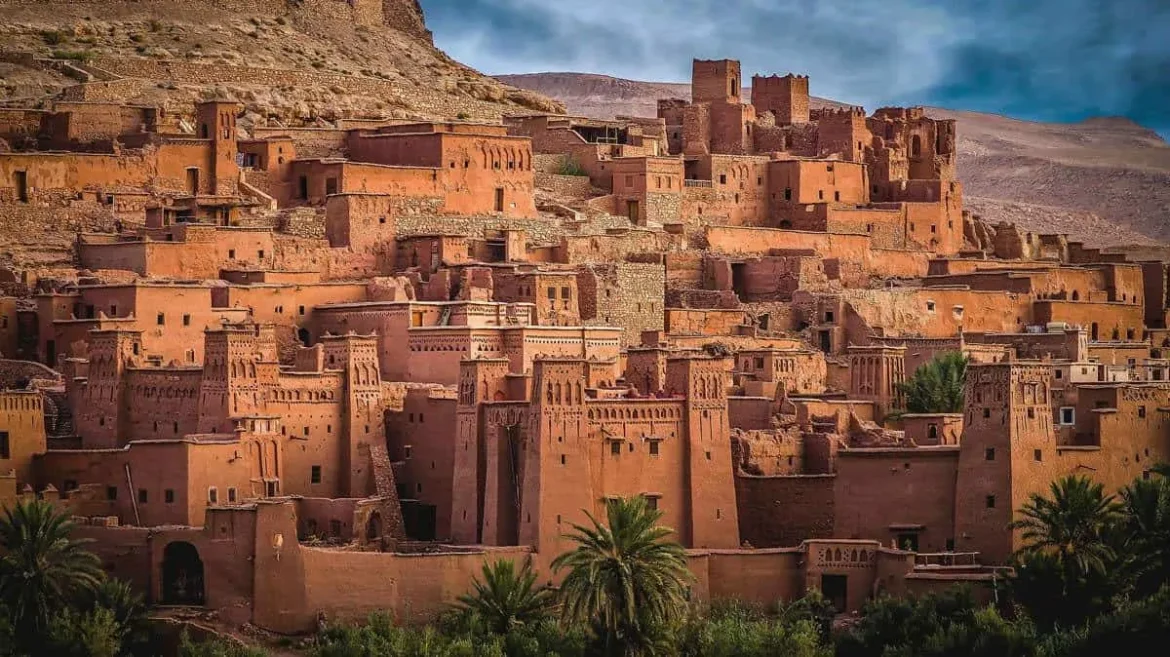
In the lexicon of Moroccan travel planning, the most agonizing choice often boils down to a tale of two cities: Fez and Marrakech.
To the uninitiated, they may seem similar—ancient walled medinas, labyrinthine souks, and the call to prayer echoing over tile-roofed horizons. Yet, to the cultural historian, they are diametric opposites. They represent the duality of the Moroccan soul: the introverted, intellectual guardian of tradition (Fez) versus the extroverted, sensory-driven gateway to the Sahara (Marrakech).
If you are currently staring at a map, trying to decide where to cast your lot, this analysis cuts through the travel brochure clichés to examine the historical and atmospheric DNA of Morocco’s two greatest Imperial Cities.
1. The Historical Identity
To understand the vibe, one must understand the origin.
Fez: The Athens of Africa
Founded in the 9th century by the Idrissids, Fez is the spiritual and intellectual heartbeat of the Maghreb. It is a city built on sanctity and scholarship. It houses the University of Al-Qarawiyyin, founded by Fatima al-Fihri in 859 AD—the oldest degree-granting university in the world.
- The Vibe: Serious, pious, aristocratic, and fiercely protective of its heritage. Fez feels medieval because, in many ways, it still is. It does not bend easily to tourism; you must bend to it.
Marrakech: The Red City
Founded in the 11th century by the Almoravids (nomadic Berber warriors from the desert), Marrakech was built as a trading hub—a “land port” for caravans coming from Timbuktu. It is the city of trade, exchange, and spectacle.
- The Vibe: Hedonistic, vibrant, chaotic, and cinematic. Marrakech is the “Hollywood” of Morocco. It is painted in ochre (hence the “Red City”) and designed to impress, entertain, and trade.
2. The Medina Experience: Labyrinth vs. Stage
Fez (Fes el-Bali)
The medina of Fez is the world’s largest car-free urban zone. It is a dense, gray-and-white honeycomb of over 9,000 alleyways, some so narrow you must turn sideways to let a donkey pass.
- The Reality: Getting lost here isn’t a possibility; it is a certainty. Fez is introverted. The high walls hide the beauty; you must knock on doors to see the palaces. It feels secretive and ancient.
- Best For: The traveler who wants to time-travel. If you want to see artisans tooling leather, hammering copper, or weaving silk exactly as they did 600 years ago, Fez is unrivaled.
Marrakech (The Souks & Jemaa el-Fnaa)
Marrakech’s medina is wider, flatter, and dominated by the Jemaa el-Fnaa, a massive open square that UNESCO declared a Masterpiece of the Oral and Intangible Heritage of Humanity.
- The Reality: It is a performance. By day, snake charmers and juice vendors; by night, a smoking, grilling, storytelling carnival. The souks are more commercialized than Fez, catering heavily to tourists with trendy basketry, rugs, and décor.
- Best For: The sensory seeker. It is loud, aggressive, and incredibly fun. It offers a “vacation” energy that the serious Fez lacks.
3. The Palette and The Plate
Culinary Distinction
- Fez (Fassi Cuisine): Fez is the culinary capital. The food here is refined, often combining sweet and savory flavors (a legacy of Andalusian influence).
- The Dish to Try: Pastilla. A flaky phyllo pie traditionally stuffed with pigeon (now often chicken), almonds, cinnamon, and sugar.
- Marrakech (Marrakshi Cuisine): The food is hearty, robust, and influenced by the desert. Street food reigns supreme here.
- The Dish to Try: Tangia. Not to be confused with Tagine. Tangia is a bachelor’s stew of beef/lamb, preserved lemon, and garlic, slow-cooked in a clay urn in the embers of a hammam furnace.
Visual Esthetics
- Fez: Defined by intricate Zellij (mosaic tilework), carved cedar wood, and stucco. It is a masterpiece of Marinid architecture. The palette is blue (cobalt) and green.
- Marrakech: Defined by Tadelakt (polished limestone plaster), lush gardens (like the Majorelle), and palm trees. The palette is terracotta red, bright blue, and dusty yellow.
4. Beyond the Walls: Day Trips & Geography
Geography often dictates the decision for travelers with limited time.
| Choose Fez if you want to visit… | Choose Marrakech if you want to visit… |
| Chefchaouen: The famous Blue Pearl is a manageable (though long) day trip or transfer from Fez. | The Sahara Desert: Marrakech is the primary gateway to the High Atlas and the dunes of Merzouga (though still a long drive). |
| Volubilis & Meknes: The best Roman ruins in Morocco and the “Versailles of Morocco” are just an hour away. | Essaouira: A breezy, Portuguese-influenced coastal town perfect for escaping the heat. |
| Middle Atlas: Cedar forests and Barbary macaque monkeys. | High Atlas Mountains: Hiking Toubkal or visiting Berber villages in the Ourika Valley. |
5. The Verdict: Which one is for you?
Choose FEZ if:
- You are a history buff, an architecture nerd, or a spiritual seeker.
- You prefer “authenticity” over “luxury.”
- You don’t mind grit, donkeys, and navigating complex spaces.
- You want to shop for high-quality traditional crafts (leather, pottery, metalwork) directly from the source.
- You prefer a slightly cooler, mountain climate (though summers are still hot).
Choose MARRAKECH if:
- You are planning a honeymoon, a girls’ trip, or a luxury getaway.
- You want access to world-class nightlife, fusion restaurants, and concept stores.
- You want a mix of culture and relaxation (Marrakech has incredible pools and spas).
- You want to see the desert or the High Atlas mountains.
- You are traveling with children (the visual spectacle is more engaging for kids than the density of Fez).
Moroccofy’s Final Thought
If you can, do both. The train ride between them is about 6.5 hours and offers a transition through the changing landscapes of the Kingdom.
But if you must choose: Marrakech appeals to the heart; Fez appeals to the mind. Marrakech will seduce you with its rhythm; Fez will command your respect with its silence.