
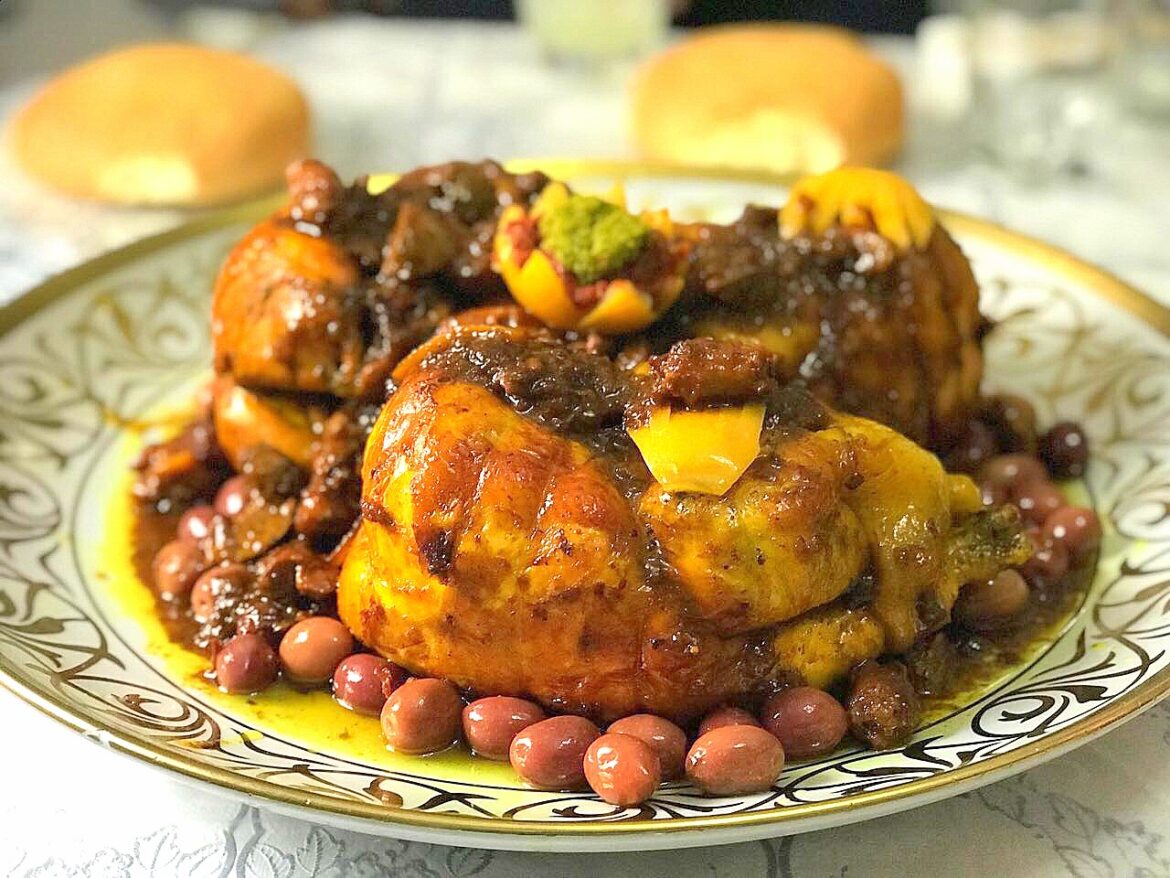
To understand the soul of Moroccan cuisine, one must look past the Couscous Fridays and the charcoal haze of street kebabs, straight into the golden, shimmering heart of Djaj Mqualli—Chicken with Preserved Lemons and Olives.
In the West, “tagine” is often misused as a catch-all term for any Moroccan stew. But in the labyrinthine medinas of Fes and the bustling kitchens of Casablanca, Djaj Mqualli is not merely a recipe; it is a masterclass in the chemistry of reduction and the preservation of history. It represents the perfect marriage of the indigenous Amazigh cooking vessel and the sophisticated, spice-laden palate brought by Arab and Andalusian waves of migration.
This is not a dish of hasty assembly. It is a slow, deliberate courtship between the sharp acidity of fermented lemons and the unctuous, savory sweetness of caramelized onions.
The Cultural Anatomy of the Dish
1. The Trinity: Saffron, Ginger, and Time
Unlike the sweet and savory tagines that feature prunes or apricots, Djaj Mqualli is strictly savory and tangy. Its flavor profile relies on a yellow spice palette:
- Turmeric (Kherkoum): For the earthiness and the vibrant golden hue.
- Ginger (Skinjbir): It must be ground, providing a subtle heat that cuts through the richness of the chicken fat.
- Saffron (Zafran Hor): Real saffron from Taliouine is non-negotiable here. It provides the metallic, floral aroma that elevates the dish from rustic to regal.
2. L’Hamd Marqaad: The Preserved Lemon
The secret weapon of the Moroccan larder is the preserved lemon.1 Buried in salt and left to ferment for months (sometimes years), the lemon’s bitterness transforms into a mellow, intense floral perfume. In this dish, the rind provides texture, while the pulp dissolves into the sauce, seasoning it from within.
3. The Ritual of “Daghmira”
If you ask a Moroccan grandmother what separates a novice cook from a master, she will likely answer with one word: Daghmira.
Most foreign adaptations of this recipe result in a watery soup. Authentic Mqualli requires the sauce to be reduced until the water has evaporated and the onions have melted into a thick, jam-like consistency that separates from the oil.2 This concentrated sauce—the daghmira—is the prize everyone fights for with their bread.
The Recipe: Authentic Chicken Tagine with Preserved Lemon & Olives
This recipe bypasses the shortcuts. It uses the traditional method of braising and reduction to achieve the coveted daghmira.
Prep time: 30 minutes (plus marinating)
Cook time: 1 hour 15 minutes
Serves: 4
The Market List
The Meat:
- 1 Whole Chicken (approx. 1.5kg): Traditionally, djaj beldi (free-range country chicken) is used for its deeper flavor, but a standard roaster works well. Cut into joints (legs, thighs, breasts halved), skin on.
The Marinade (Chermoula):
- 3 cloves garlic: Minced into a fine paste.
- 1 tsp ground ginger: High quality.
- 1 tsp turmeric powder.
- ½ tsp white pepper: Preferred over black pepper for a cleaner heat.
- 1 pinch saffron threads: Crumbled.
- ½ Preserved Lemon: Pulp only (remove seeds), mashed. Save the rind for later.
- 1 tbsp water: To bind the spices.
The Pot:
- 3 large onions: White or yellow, grated or very finely diced (essential for the sauce texture).
- 1 small bunch fresh coriander and parsley: Tied into a bouquet.
- 1 tsp Smen (optional): Moroccan fermented butter.3 It adds a cheesy, funky depth comparable to Parmesan or blue cheese.
- Olive Oil & Vegetable Oil: A mix of both.
- 1 cup Olives: Traditionally Meslalla (cracked green olives) or Violet/Red olives. Avoid generic pitted green olives if possible; they lack the requisite bitterness.
The Method
Phase 1: The Infusion
- Clean the Chicken: In Moroccan fashion, wash the chicken thoroughly with salt and fresh lemon juice to remove any “poultry smell,” then rinse and pat dry.
- Marinate: In a large bowl, mix the garlic, ginger, turmeric, pepper, saffron, and the mashed pulp of the preserved lemon with a splash of water. Rub this paste thoroughly into the chicken, getting under the skin. Cover and refrigerate for at least 2 hours, preferably overnight.
Phase 2: The Cold Start
- The Pot: While you can cook this in a clay tagine, achieving a proper daghmira is often easier in a heavy-bottomed Dutch oven or pot, transferring to a tagine for serving.
- Layer: Place the finely diced onions, the oil, the smen (if using), and the marinated chicken into the pot.
- Simmer: Turn the heat to medium-low. Do not add water yet. Cover and let the chicken sweat. The onions will release their liquid. Stir occasionally to coat the chicken.
- Braise: After 15 minutes, add the herb bouquet. Add just enough water to come halfway up the chicken pieces. Cover and simmer gently for 45 minutes to an hour, until the meat is tender and falling off the bone.
Phase 3: The Daghmira (Crucial Step)
- Remove Chicken: Once cooked, carefully remove the chicken pieces and set them aside. (Optional: You can briefly brown the chicken under a broiler/grill if you prefer crispy skin, though soft skin is traditional for this specific dish).
- Reduce: You are now left with onions, liquid, and oil. Discard the herb bouquet. Turn the heat up to medium-high. Cook uncovered, stirring frequently.
- Watch closely: The water will evaporate. The onions will turn from white to gold to a deep, caramelized brown. The sauce will thicken. You know it is ready when the oil separates from the thick onion mixture—the sauce will look “curdled” or separated. This is the daghmira.
- Final Touch: Add the reserved lemon rinds (cut into strips) and the olives to the sauce. Simmer for 2 minutes just to heat them through.
Phase 4: Assembly
- Arrange the chicken on a serving platter or inside a warm clay tagine.
- Spoon the thick, rich daghmira, olives, and lemon peels over the chicken.4
How to Eat: A Note on Etiquette
In Morocco, this dish is a communal experience. It is served in the center of the table with round loaves of Khobz (bread).
- The Bread is the Spoon: Cut a piece of bread, hold it between the thumb and first two fingers of your right hand.
- The Scoop: Use the crust to scoop up a piece of meat and a generous amount of the onion sauce.
- The Olive: It is customary to ensure everyone gets a fair share of the olives.
Why This Dish Matters
Djaj Mqualli is a testament to the Moroccan philosophy of food: ordinary ingredients—onions, lemons, a chicken—transmuted by patience and history into something golden and complex. It is the taste of a wedding in Marrakech, a lunch in the Atlas Mountains, and a Friday gathering in Tangier. It is the taste of home.